
High fantasy of the journey
The Long Road
One small figure in a vast land: the road, the fellowship, the shadow, the song. The road goes on. Walk it.
Premium only. Every people, every role, every teaching included.
View full illustrationThe world
Where it happens
The Eldermarch runs from a grey harbor where a mist never lifts to a northern wall where three strongholds hold one line: the granite city of men, the elves’ living fortress whose walls are grown as much as built, and the dwarves’ iron gate. South of the wall lie hedge-country and river towns, a scholar-city too proud for guest-right, horse plains whose riders are the world’s post, and a deep wood with a dark heart. Beyond the wall, a land that is losing its colors — and the one who wears the Black Crown. Most folk do not believe he is returning. You will know better, and be disbelieved.
The journey is the game: legs and weather, rations and rests, a named pony, camps where the watch rotation decides who becomes your friend. Power is priced — every shortcut feeds a meter called the Shadow that whispers at the moment of choice — and Hope is earned by mercy, song and kept promises, then spent to stand back up. Nothing here casts spells: the world’s quiet magic is song and rune-craft, its best blades are heirlooms with names, and no one comes back from the dead. Victories are real. They cost. That is the point.
And where you begin is your choice. Twelve roads out of twelve hearths — a locked box at your own garden gate, a rotation on the wall, a night the ring-fort holds under siege — each opens a different corner of the Eldermarch. You pick where your first campaign starts (the Inheritance in the Bramblelands is the default); take the dark road instead, a fallen heritage, and you begin not at a hearth but at a wound.


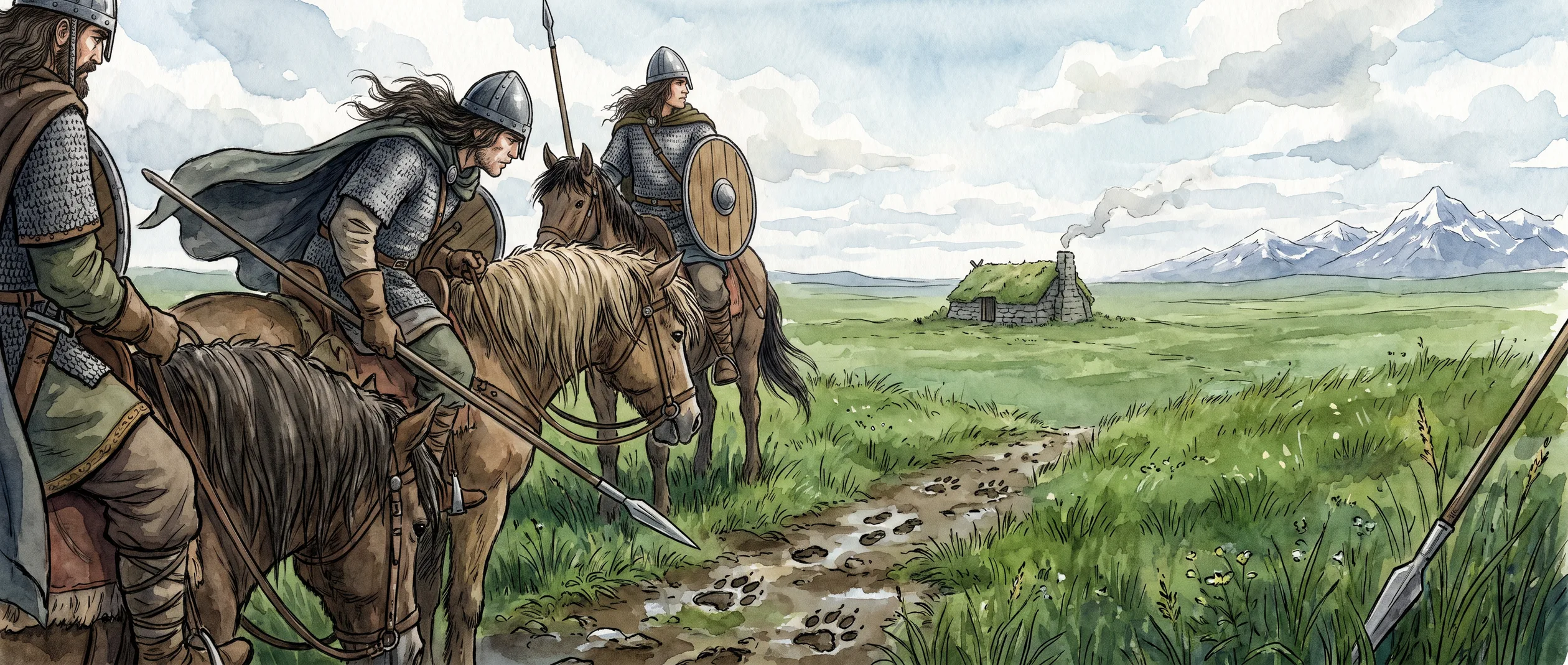


Twelve of a score of named holds, ruins and roads — the gazetteer keeps the miles honest; your table walks its own way between them. (The four dark-road starts open elsewhere, at a wound, chosen with your table.)

The law of the road
The journey is the game
The March is crossed on foot, and the crossing is the story. Legs are played day by day — rations, weather, the quality of the night’s rest, a pony with a name and opinions. The first trouble on a leg stops it, and what you do about it is the day’s tale. Arriving changed matters more than arriving fast.
And the road has law. Bread and salt are sacred where the good peoples live — host or guest, whoever breaks them is marked for it. Inns are truce-ground: no steel under an inn roof, so you may sit across the table from your enemy and talk. You can feel where the world is still warm by whether the old courtesies hold.

What drives it
The Shadow, and Hope against it
The Shadow is the price of the easy road: cruelty, betrayal, broken bread-and-salt, the Enemy’s things carried too long. It speaks — always to you, always at the moment of choice, always offering the easier way — and the world can see it on you long before the end. Against it the March keeps one currency the dark cannot mint: Hope, earned by mercy shown and promises kept, spent to stand back up when the dark is too much. There is no resurrection and no magical healing here — there are herbs, chirurgy, songs, and the people who hand you their own light. Or walk the dark road from the start: play one of the Fallen, who begin at Shadow 4, already marked — a Hollowed elf, a Gold-Cursed dwarf, an Oathless man — hunted by the free peoples as the Enemy’s servant and owned by the Enemy as a tool at once, and still with a hard road home.
Shadow runs 0–10 — what each band costs you
- 1–3: the voice begins — at moments of choice, it offers the easier road
- 4–6: it shows: dogs growl, doors hesitate, honest folk feel it without knowing why
- 7–9: the whisper is near-ceaseless, and the good places dim a little as you pass
- 10: The Shadow reaches 10 — the voice wins. The GM resolves their fate (a Hollowed thing wearing their face, a walk north from which none return, a quiet seat at HIS table) — and the company inherits the grief.
The Shadow never commands. It offers — always to you, always at the moment of choice: “you could just leave him.” One voice of temptation across a whole campaign. You will come to know it. That is the point of it.

How it plays
The systems you can ask for
These mechanics are original to The Long Road — you will not know them from any rulebook. Read them here, then simply ask your gamemaster for any of them at the table; the engine owns every tracked number, and your gamemaster plays out the rest.
What playing here costs: a fight you lose is a fight you lost — winding the story back at all spends The Long Road’s own Turnback Stone, and there is no other way to undo it. Beyond that, what you carry is weighed, a night away from a roof eats a ration, breaking off from a fight gives your enemies a free swing, and a camp in the open is exposed. You never have to shop for food, though: passing through anywhere that sells it, your gamemaster tops the packs up for you and pays for it out of your own purse — so the coin moves without you asking, and the ledger always says where it went. None of that can be switched off, which is what makes the numbers here worth anything - the sprawl's rent and the Lifeline contract are the only two things you choose.
Every role commits to a oath as it grows — Wilds-Keeper, Oath of the Wall, Quiet Hand, Scriptorium Scribe, and more. See every path ↓
“The road gives, the road takes.”

A day on the road
Read a leg of the journey
What play actually feels like — a leg of a real journey, gamemaster and player, every number the engine’s own.

Hope, and the world’s one magic
The song is the spell
No one here casts spells. The world’s one arcane register belongs to the Minstrel: a Song of Power is a performance — it can fail, it costs real breath, and it moves the two currencies this world actually fights with: courage and fear. The old songs are composed in the elven high speech; learn the song and you learn the tongue.
The dark answers with the wail — where song gives courage, the wail sows dread — and a minstrel of rank may answer back: the duel of songs, with the room’s courage riding on it. Lost songs are treasure in this world, and the love-ballads are the most-sought of all.
Behind every song stands the world’s own light: Hope — earned by mercy shown, promises kept and songs sung true, spent to stand back up when the dark is too much. There is no resurrection in the March and no spell that mends despair. There is Hope, and the people who hand it to each other.

Who you can be
16 peoples
Where you commit
Every path your role can take
Every role here is original to The Long Road, and each one commits to one of its oaths (three for the Warrior; two for the rest) at level 6 — an earned milestone, not a starting pick. You pick the path you want, and its features unlock as you climb (levels 6, 10, 14, 18). Committing also grants a signature gift — a piece of gear, and some Pennies to go with it, that marks the path. This is every path in the world, so the moment you start you already know where you can be headed. In this world a character walks one road — you commit to a single role and go deep; there is no blending of two.
The features are named here; ask your gamemaster what each does in play — and the signature gift each path grants carries a real, counted charge: spend it and the dice remember until it comes back.
Waywarden Wilds-Keeper · Shadow-Hunter
Wilds-Keeper
A warden who reads sky and ground a day ahead — storms met with tents already staked, camps set where the wild is kindest, and a company that is never again surprised by the land it walks.
- L6 Read the Sky — You read weather a day out and ground a half-mile out: the company is never surprised by storm or terrain you have seen coming, and your camps sit where the wild is kindest (wild rest risk one step lighter).
- L10 Friend of Beast and Bird — Wild beasts do not startle at you and working animals trust you; once per session you may read what a beast or bird lately saw (the GM answers honestly, in images).
- L14 The Kind Country — The wild keeps your company as its own: in any land you have read, camps carry no wild-rest risk and the forage is enough — the country you understand stops charging you rent.
- L18 The Wood Speaks First — The land warns you: an ambush in wild country cannot surprise the company, and once per session the wild itself takes a hand — a bird breaks cover, a beast turns, a slope gives way under the wrong boots.
Unlock gift (L6): Oilskin Field-Kit — A wax-sealed roll of snares, lines and weather-tells; once per long rest, advantage on a survival or beastcraft check. (+30 Pennies)
Shadow-Hunter
A grim tallykeeper of the Shadow’s creatures who feels a wrongness before it shows its teeth — one of the few walking who can look at a too-perfect stranger and know the lie for what it is.
- L6 Feel the Wrongness — The Shadow's creatures read as WRONG to you at a glance — and a woven Seeming itches: you are one of the few who may pierce a Sovereign's disguise (a Sense check the GM calls).
- L10 The Long Hunt — Once marked in your tally-book, a creature of the Shadow cannot lose you by mundane flight: you track it across regions, and your first arrow against it each fight strikes with advantage.
- L14 The Tally Fills — Your ledger has an answer for most of his kennel: on sight of a Shadow-creature you name what BITES it — the bane the thing fears (silver, sunlight, fire, a song). Knowing is not having; the company still has to find one.
- L18 Nothing of His Passes — No servant of the Shadow crosses ground you watch unseen. Once per session, your first strike on a marked creature lands where the tally says it must — the GM resolves it as a true telling blow.
Unlock gift (L6): Hunter's Tally-Book — A grim little ledger of banes and habits; once per session, declare you KNOW this creature of the Shadow — advantage on the next roll against it. (+35 Pennies)
Warrior Oath of the Wall · Axe of the Vein · Banner-Captain
Oath of the Wall
A soldier sworn to the space between the enemy and the ones behind — the shield that does not step back, and the last name read out with honor when the horn finally sounds.
- L6 Interpose — When a creature you can reach strikes at a companion beside you, you may take the blow instead: the attack resolves against you. The wall is not a place; it is a decision.
- L10 Hold the Door — In a doorway, on a bridge, at a stair — where only one can pass, you count as a wall: enemies cannot press past you while you stand, and your interpose reach widens to anyone behind you.
- L14 The Oath Answers — The wall is wherever you are looking: you may Interpose for ANY companion you can see, not only one within reach — the oath crosses the room faster than you do.
- L18 The Wall That Was There — The line behind you cannot be flanked or overrun while you stand. Once per fight your refusal simply stops a charge dead — the enemy arrives, and does not get through.
Unlock gift (L6): Wall-Oath Cloakpin — A plain iron pin of the garrison; once per long rest, set your feet and be the wall — ADVANTAGE on your next roll. (Taking a blow meant for a companion is the Interpose teaching itself, not the pin.) (+40 Pennies)
Axe of the Vein
A garrison axe of the deep holds, drilled where the corridors are narrow and the dark fights back — every swing measured to end the matter before it reaches the lamps.
- L6 The Deep Swing — Your two-handed blows carry the hold's weight: when you fell a foe, the follow-through may carry into an adjacent enemy (the GM grants the cleave when the fiction earns it).
- L10 Garrison Temper — Pain banks, it does not spend: while below half your health you strike as if fresh — your attacks suffer no penalty from fear, wounds or Weariness.
- L14 The Hold's Weight — What shields a foe is a suggestion: shields and cover give no protection against your two-handed blows — the hold taught the axe to answer the wall, not the man behind it.
- L18 The Vein Does Not Yield — Delfhame is grief with an edge on it: while below half your health you strike at advantage, and your Deep Swing carries into every foe still within reach, not just one.
Unlock gift (L6): Garrison Greataxe — Irongate issue, notched and true; once per short rest, reroll one damage die and take the new roll. (+40 Pennies)
Banner-Captain
A leader whose voice is a rallying-point — the horn-call that unbreaks a line, the raised standard that turns a huddle of frightened neighbors into a company that holds.
- L6 The Rallying Word — Your voice carries orders through chaos: once per fight, a companion who hears you may immediately shake a fear effect or re-form (stand, re-grip, re-set) without losing their action.
- L10 Banner of the Free — Where you plant your standard, the line holds: companions fighting within sight of your banner test loyalty and courage at advantage, and the militia you drill counts as soldiers for one night.
- L14 The Muster Knows You — Your name is worth men: levies raised under it drill a step above themselves, and a banner you argue for at a moot gains its segment a stage sooner (`the-banners.md`).
- L18 The Horn Answers — Once per session your call brings help the March owed you — a patrol, a levy, a warden company. The GM says WHO arrives and what it costs them; a captain the free lands trust is never quite alone.
Unlock gift (L6): The Company Horn — A bound war-horn, small cousin of the Unblown Horn of Greywatch; once per long rest, SOUND IT — your own next roll rides the rally at advantage, and any aid within earshot has heard the call (what answers is the GM's). (+50 Pennies)
Burglar Quiet Hand · Riddle-Master
Quiet Hand
A burglar of the old discipline — waxed picks, patient hands, and the professional pride of leaving a room exactly as it was found, minus one carefully chosen thing.
- L6 Soft Entry — Locks, latches and shutters open to you without noise or trace; a room you have burgled cannot prove you were ever in it.
- L10 Pocket the Moment — Once per scene you may already HAVE done the small sleight — the guard's key lifted, the letter swapped, the coin palmed — declared after the fact, if the fiction allows you were close enough.
- L14 Nothing Is Locked — No mundane lock, bar, seal or shutter refuses you: entry becomes a question of TIME and noise, never of skill. What is warded by something older than locks is another matter.
- L18 The Ghost of the House — Once per session you were never there: a discovery of your entry simply comes undone — the guard remembers an empty corridor, the seal reads unbroken, and the house blames the wind.
Unlock gift (L6): Wax-Boxed Picks — Fine picks bedded in wax so they never ring; once per long rest, advantage on a thievery check. (+30 Pennies)
Riddle-Master
A gambler and riddle-wit who plays people as surely as games — bluffs read like open books, wagers steered by a smile, and riddling doors that answer a shade kindlier.
- L6 The Wager's Friend — You know the riddle-canon and the etiquette of every wager in the March: you may always PROPOSE the contest of wits instead of the contest of arms, and creatures of the old customs must at least listen.
- L10 Read the Table — Bluff, tell and hidden intent open to you like cards face-up: advantage to see through a lie in any game, wager or bargain — and rune-doors that answer riddles answer YOU a hint kindlier.
- L14 The Unanswerable — Once per session you pose the riddle that STOPS a thing which must answer — a barrow-warden, a rune-door, an old power that keeps the forms. While it chews, the company acts.
- L18 The Wager Always Takes — You may wager for what a thing CAN give — a passage, a name, a life owed. The March's old powers honour a riddle-wager they lose; men are less reliable, which is the fun of it.
Unlock gift (L6): Carved Riddle-Ring — A puzzle-ring of hedge-oak, worn smooth by thinking thumbs; once per session, advantage on a riddle, wager or lore check. (+30 Pennies)
Loremaster Scriptorium Scribe · Counsel of Kings
Scriptorium Scribe
A traveling scholar with a folding desk and an appetite for old scripts — the one who copies the fading page tonight, because no one else will pass this way in time.
- L6 The Fair Copy — Your transcriptions are archive-grade: a chart you copy keeps its secrets (moon-writing included), and the Chartwright pays copyist rates for your surveys — the company's miles become money in your hand.
- L10 The Closed Stacks — Scriveholm's locked shelves open to your seal: once per session, name a text the archives COULD hold — the GM tells you honestly whether it exists, and where.
- L14 The Three Archives — You know which of the three archives holds a thing before you go — and its keeper takes your letter. A journey for lore becomes one leg, not three.
- L18 The Keeper's Seal — The archives name you a keeper: the closed stacks of ALL three open to you, and a formulary with one living keeper left will teach YOU rather than die with them.
Unlock gift (L6): Traveling Writing-Desk — A scholar's lap-desk of Scriveholm make; once per long rest, advantage on an old_tongues or lore check. (+35 Pennies)
Counsel of Kings
A quiet voice behind the high seats who reads courts the way wardens read weather — and sees the lie at a table where everyone else sees an honored guest.
- L6 Standing at Court — Halls that weigh name and letters seat you: you may request audience at any court of the free peoples, and your letters of passage carry a counselor's weight.
- L10 The Untangled Word — You hear the shape of a poisoned counsel: advantage to detect advice that serves a hidden master — and when you expose it before the court, the whisperer's work loses a segment publicly.
- L14 The Kingmaker's Ear — A court that hears you REMEMBERS: once per session your counsel sets a house's course — a levy raised, a border held, a marriage refused. Consequences follow; so does the credit.
- L18 The Alliance Made — Once per campaign you bind two houses that have not spoken in a generation: a banner's segment, and a line written on the grudge-ledger's CREDIT side (`peoples.md`). The March remembers who did it.
Unlock gift (L6): Sealless Signet — A signet bearing no house — the mark of counsel owing none; once per session, advantage to EXPOSE A FALSEHOOD (and it wipes a whisperer-clock segment when it lands — GM). (+40 Pennies)
Minstrel Hearth-Song · March-Song
Hearth-Song
A singer of the near kind — the song that steadies a shaking room, mends the evening after a hard day, and sends Hope around the fire like bread.
- L6 The Kindled Camp — Your evening music is a hearth without walls: the camp rests one step better, and a companion who took the Grief today feels it loosen a little.
- L10 Song of Mending — Sung over the Healer's work, your music steadies the hand and the patient: treatment checks near your song roll at advantage, and Hope returns a step easier under your roof of sound.
- L14 The Fire That Follows — Your hearth travels: even a cold camp in bad country rests as though it had walls — the company sleeps as if someone kept the fire, because someone did.
- L18 The Song of Home — Once per session your song gives back what the road took: a companion sheds a step of Weariness, or the Shadow's whisper goes quiet in them for a night. You cannot sing it for yourself.
Unlock gift (L6): The Small Harp — Lap-harp of seasoned cherry; once per long rest, play the evening down to quiet — advantage on your next roll, the music still warm in your ears. (+35 Pennies)
March-Song
A road-piper whose tunes carry a company one more hill — feet keeping time forget they are tired, and fear finds no room in a line that is singing.
- L6 Keep the Step — The company marches to your time: on a forced march ("one more hill") your song shoulders part of the price — you or a fellow marcher you name is spared its Weariness (the GM lifts that toll from their track when the march is tallied).
- L10 Voice Against the Wail — You may answer an anti-song in the field: your Duel of Songs shields every ally who can hear you — while you hold the melody, the wail's dread cannot take root.
- L14 The Long March — Once per journey your marching song carries the WHOLE company over one more hill: the forced march costs the company no Weariness. You still pay yours — the singer always does.
- L18 The Battle-Song — Once per session, a broken line reforms and fights: a rout you sing into simply stops being a rout. The songs about that hill will name the one who kept singing.
Unlock gift (L6): The Road-Pipe — A whistle-pipe cut for marching time; once per long rest, pipe the step and steady your own stride — advantage on your next roll, however dark the mile. (+30 Pennies)
Craftmaster Camp-Forge · The Great Making
Camp-Forge
A smith who carries the forge to the work — a field anvil off the pony’s back, a night’s repairs by ember-light, and gear that holds because someone mended it with love.
- L6 The Tinker's Round — Every village needs you the day you arrive: pots mended, blades set, harness stitched — you can earn honest pennies anywhere with a hearth, and the gossip comes free with the work.
- L10 Make Do and Mend — At your fire, broken is a temporary condition: once per long rest you restore a ruined piece of kit to serviceable — and gear you maintain simply does not fail at the bad moment.
- L14 The Wandering Workshop — Given a day and a fire, you raise a working shop anywhere: workshop-tier recipes on the open road, with no roof and no guild looking over your shoulder.
- L18 Nothing Is Beyond Mending — Once per session a thing the company mourned as LOST is not: the shattered wheel, the burnt chart, the heirloom in pieces. It takes you a night, and it is never quite the same — it is better mended than it was whole.
Unlock gift (L6): Field Anvil — A back-broken little anvil every tinker curses and none abandons; once per long rest, advantage on a craft check at the fire. (+35 Pennies)
The Great Making
An apprentice to the old high craft — named works undertaken under a master’s eye, and a reader of makers’ runes from whom no made thing can hide whose hand it truly was.
- L6 The True Anvil — The holds recognize your punch-mark: you may work a true anvil wherever the Hold-Kin keep one, and formulary recipes open to you one rank early.
- L10 Apprentice to the Great Making — You may undertake NAMED works (craft_magic: silver + days + a component) under a master's eye — and you can READ a maker's runes: the provenance of any made thing, including the unmasking of a gift that was never a gift.
- L14 Master of the Formularies — The war-runes and the starsilver temper are YOURS to hold and to TEACH, rank by rank — which makes you one of the few answers to a formulary down to its last keeper.
- L18 The Named Work — You may make an heirloom that carries a NAME and a virtue — grants, attunement, a history that starts with you. The songs will say who forged it, which is the only immortality this world offers a maker.
Unlock gift (L6): Master's Hammer — A smith's hammer bearing an Emberhand punch-mark; a tool, a weapon, and a promise — once per short rest, reroll one damage die. (+45 Pennies)
Healer Herb-Lore of the Green Roads · House Chirurgeon
Herb-Lore of the Green Roads
A healer of the hedgerow school — the right leaf known at a glance, a fever ended for a handful of pennies, and a green satchel worth more than a sword on the tenth day out.
- L6 The Green Roads — You gather as you walk: on any leg through living country you restock one spent Salve for free — the road itself is your pharmacy, and you know which hedgerow hides what.
- L10 Field Physic — Your poultices work at marching pace: stabilizing or treating a companion no longer slows the company, and a patient in your care shakes an affliction one day sooner.
- L14 What the Green Gives — In living country your Salves come back FULL on a long rest, and if the land holds a physic for an affliction, you can find it — the green is a pharmacy to someone who was taught to read it.
- L18 The Old Remedies — Once per session the green answers what medicine cannot: a curse's grip loosens, a Shadow-touched wound consents to close. The grandmothers knew things the houses wrote down wrong.
Unlock gift (L6): Green Satchel — A gathered-and-dried pharmacopeia on a strap; once per long rest, advantage on an herbcraft check. (+30 Pennies)
House Chirurgeon
A healer of the trained house — needle, gut and steady hands that pull the badly hurt back from the edge, and the standing to order a lord to lie still.
- L6 The Steady Hand — Grave wounds are your trade: your treatment of the Cold Wound, Frost-rot and the deep hurts counts as a haven's care for one step of healing — the House taught you what the road cannot.
- L10 Against the Grave — Death negotiates with you, and you have the better lawyer: once per SHORT rest, turn a companion's failed death-state into stabilized — and the house-trained hand leaves no scar where a road-healer would.
- L14 The Surgeon's Table — Given an hour, a table and light, you undo what the road did: a maiming set right, a rot cut clean, a wound that would not close finally closing. Not magic — a trade, practised on worse.
- L18 The House's Master — Every chirurgeon's house in the March opens to your name. Once per session a companion's grave hurt is simply UNDONE — the story pays the price instead (a debt, a season, a favour owed), never the life.
Unlock gift (L6): The Rolled Kit — Needles, gut, clamps and a steady-handed reputation; once per long rest, advantage on a check to treat a grave wound or affliction. (+40 Pennies)

What you can do
7 roles

Whose door opens
Every door weighs its own currency
The March has no adventurers’ guild. It has houses, orders and hearths, and every door weighs its own coin: the haven weighs blood, the hold weighs deeds and craft, the lord’s hall weighs name and dress, the scholar-city weighs learning — a citation opens what silver cannot — and the quiet coves weigh peace. Learn what a house honors before you knock.
Join one and the belonging is real: duties kept raise your standing, rank opens doors and shelves, and rivals will not share you — the wardens and the healers hold the Covenant in open contempt.

The named things
Plain steel — and the things you cannot buy
The shelves of the March sell kit: honest wool, plain steel, rope that holds. Nothing on them carries a plus-number, and nothing ever will — anything with a virtue is an heirloom: named, storied, and earned. Won, given, inherited; never shopped. Losing one is a story, and an heirloom wants an heir — your old hero becomes the ancestor in the new hero’s songs.
The old elven work sings — a thin warning note near the Shadow’s creatures, thinner as the dark thickens: a living danger-gauge, made by lines now gone or going. And rarest of all, starsilver: the gods’ binding-metal, the very bars of the broken seal under the fallen deep halls. It bites the spirit-clothed where honest iron passes through — and he strips and destroys every vein he can reach, because he knows what a blade of it can do.
War-runes are graven only by great masters, and some formularies have one living keeper left; if they die untaught, the art dies with them. “Save the knowledge” is a quest this world takes seriously. And when it is there at all, the dearest thing on the Provisioner’s shelf: the Turnback Stone — break it, and the road gives the day back.

The arsenal
Arms, and what they cost
Real rows from the engine's own tables: the dice are the dice, the prices are the prices. Your gamemaster cannot fudge them, and neither can you.
The elven curved sword — single-edged, graceful; the haven teaches it with the song.
The wood’s teaching; the famous archers of the deep wood take its devotion free.
The iron gate’s register — the hold teaches the axe as a garrison creed.
Elven pattern, worn in pairs — the hunter’s close work when the bow is too near.
The hauberk, pride of the wall garrisons; on the road it is a choice, never a default.
Dwarven plate-and-mail, sold practically only at the hold — and above it, only the named works.
… and 86 more catalogued pieces in play.

The dark in the north
A dark lord you cannot simply fight
The world does not speak his name — fear, and the old wisdom that names call. Every people curses him its own way: the North-King, the Wolf-Herd, the Thief of Vales, the Axe-Bringer, the Marrer, the Forsworn, the Long Shadow. He is not a battle waiting at the end of a map. He is a pressure: the crows wheel, counterfeit pennies spread through honest markets, and at more than one court a soft-spoken counselor is very interested in your route.
And there are the Seven. Raised kings and queens of the seven fallen elven realms, sent — never wandering — and wearing woven faces so ordinary that nobody looks twice. The haven veterans will not speak of what stands under the Seeming, except this: it is beautiful, and it is the worst thing they have ever seen. If one has come to your road, it is because you earned the visit.
He talks, too. At some stage an emissary arrives with a real, tempting offer — true relief, honestly delivered, priced in something you will miss later. You can speak with the dark in this world. It always costs.
Hardest of all: the world does not believe you. The wolves have a mundane explanation, lords who warn are called alarmists, and the one who knows walks disbelieved — until the great horn on the wall, which has never been blown, sounds at last.
The Enemy’s host
The March keeps its dread at a distance — but the dark has a shape, and now and then the road runs straight into it. These are the things the old wardens warn of, drawn from the far country where the colour bleeds out of the world.


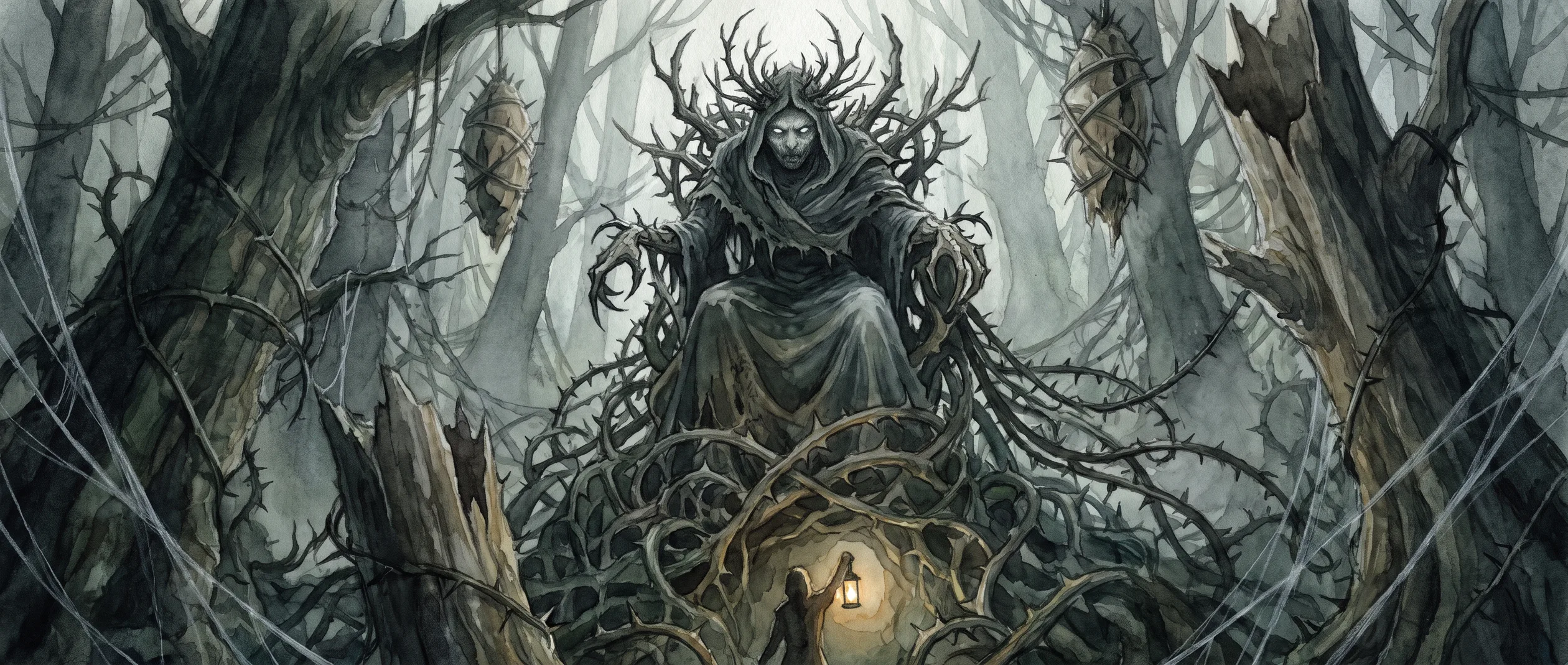


The opposition
What hunts you
Every foe is statted before the fight starts; what your party learns about them is recorded, hunt by hunt.
The night-swarm of the orc ladder — daylight is the folk’s old insurance.
His bred elite: armor, discipline — and no fear of the sun at all.
Plain steel passes through; they sleep one night a year, while the living read the dead their names.
A fallen spirit clothed in wolf-flesh — the binding-metal and the Song bite where iron cannot.
A walking hill with towers between its humps; its smell panics horses.
A raised elf-king of terrible beauty, walking veiled among us — “slain,” it is merely raised again in the north.
… and 34 more in the bestiary.

The saddest road runs west
The door in the mist
West of everything, past the last pier of the elven haven, hangs a mist that never lifts. In it stands the Mistgate — the door only elves may pass, kept by the Mistward, who opens for others a door he himself can never enter. What lies beyond, no one knows. None has returned to tell.
The Calling touches every elf alone: some pass in joy, some in weariness — and some refuse. The Steadfast said no as one line, bound themselves to the world, and garrison the living fortress looking forward. Pilgrim trains move west along the road all year; guarding one is the saddest work a company can take, and the most honored. Every farewell on that contract is forever.
Elves love once, centuries deep — and for an elf and a mortal this world offers no comfortable answer at all: two doors, and no one knows where either leads. And still they love. That is the March.
Set out on The Long Road
The Long Road is a Premium world — Premium’s best-crafted country, whole from the first step. Six of the eight play free, full campaigns each; this one and The Arcanum are what Premium opens.
Inside, nothing is held back: all thirteen peoples and the three dark-road heritages, all seven roles, every teaching, every road. The road goes on. Walk it.