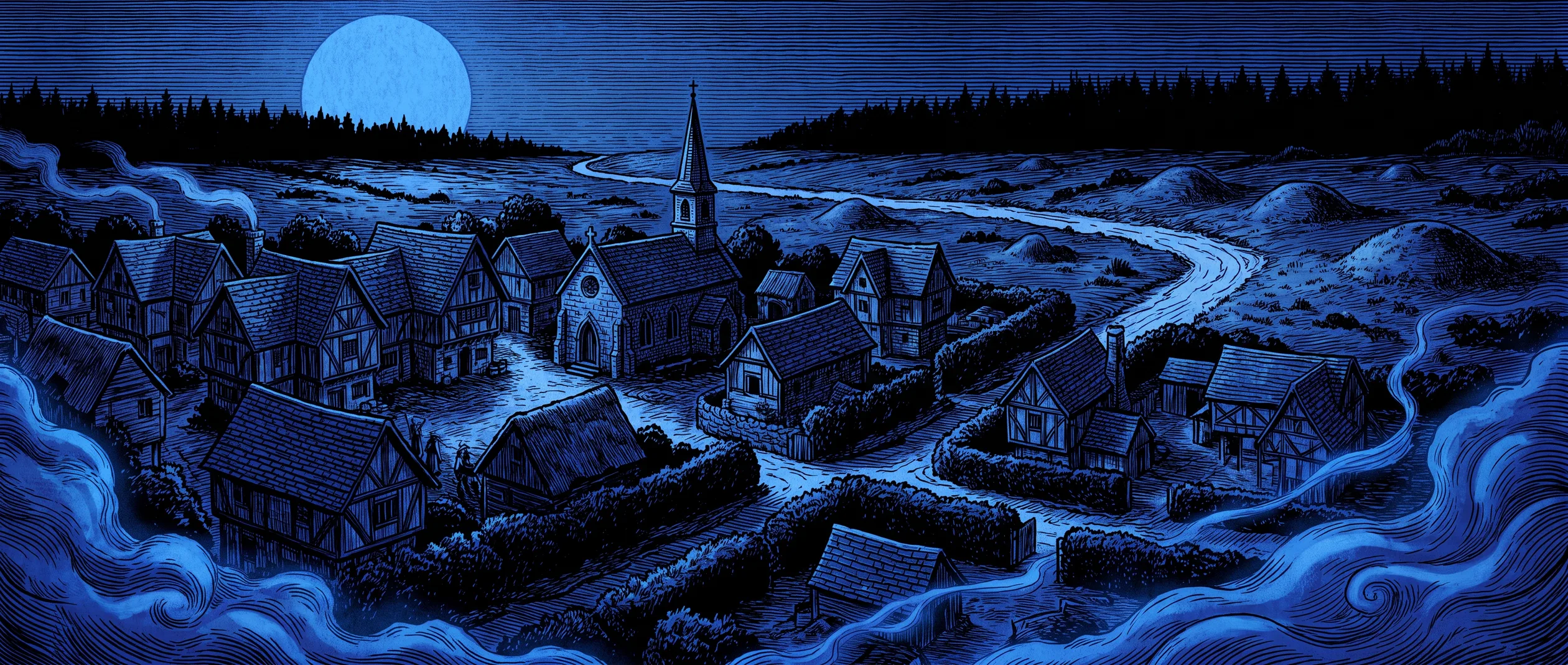
Gothic monster-hunting, gaslit and grim
Mournwick
Learn the bane, forge the gear, then finish what the dark started.
Free to explore. More character choices with Premium.
View full illustrationThe world
Where it happens
Mournwick is a fog-bound land of gaslit streets, drowned fens, and rookeries huddled against the dark, built on the scar of the Sundering — the night the veil between the living and the dead was torn. Behind the locked crypts of its cities the Pale Houses keep their secrets; down on the dockside the Drowned Mile swallows its dead; and from lamplit town to lonely village the Lantern Watch pins bounties on things that bleed wrong. Every creature that stalks the fog came through that old wound, or was born from what it let in.
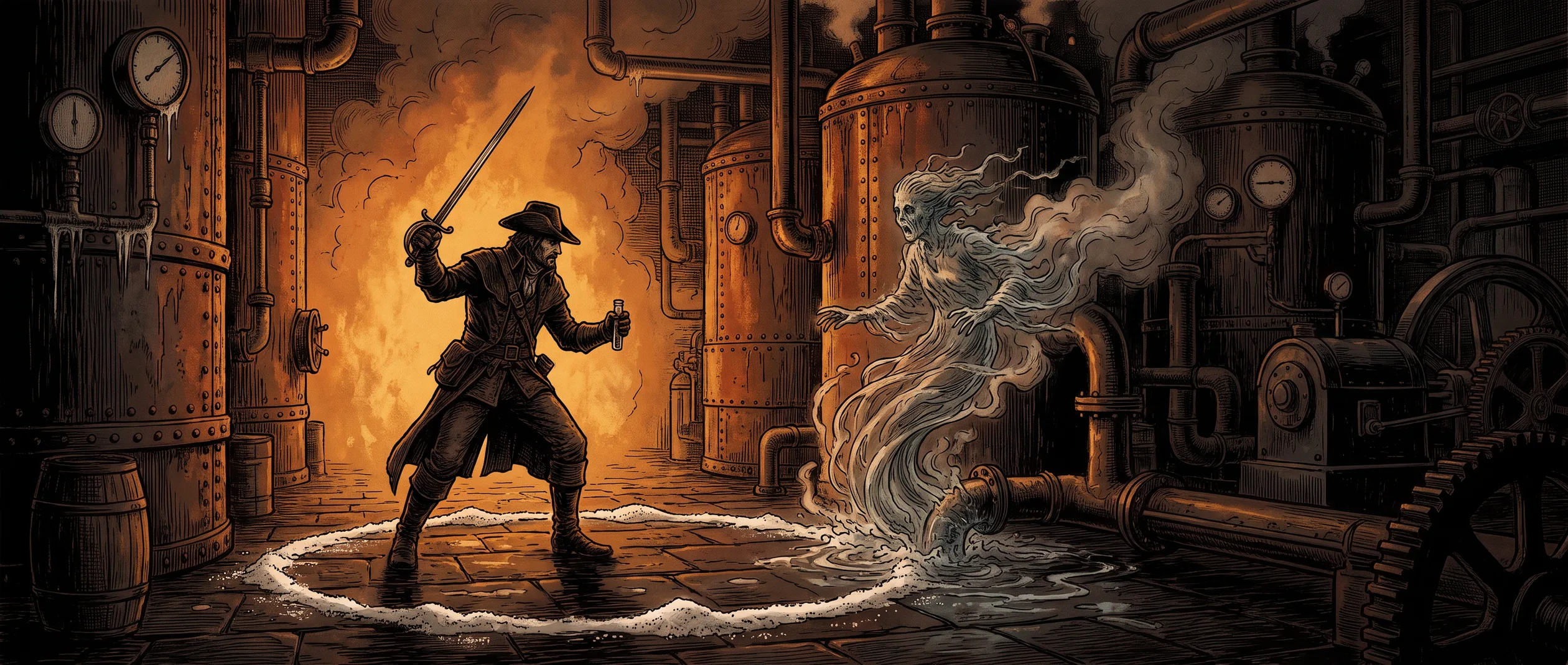
A session breathes like a hunt: a patron, a corpse with wrong wounds, then the slow work of investigation. The first encounter teaches you that your service revolver does nothing, that the thing mends faster than you can hurt it, and that retreat is a victory. The second encounter, once you have named the monster and found its bane, is the catharsis. Silver for the cursed, wood and sunlight for the blood-drinkers, cold iron for the fae: every monster is a puzzle the engine enforces, and only the right gear ends it. Or start AS the monster — Vampire, Werewolf, Hollowed — and live the hunted life, masking among the people who would burn you.
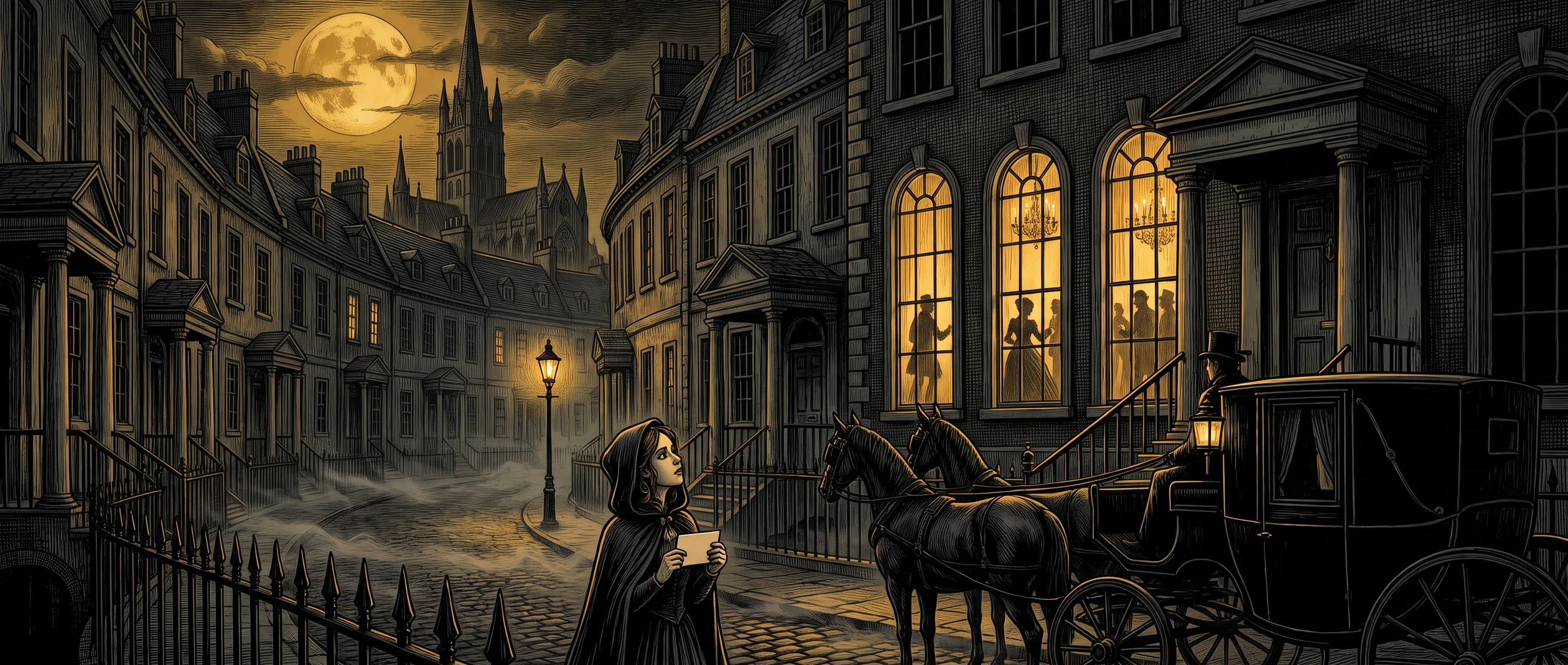
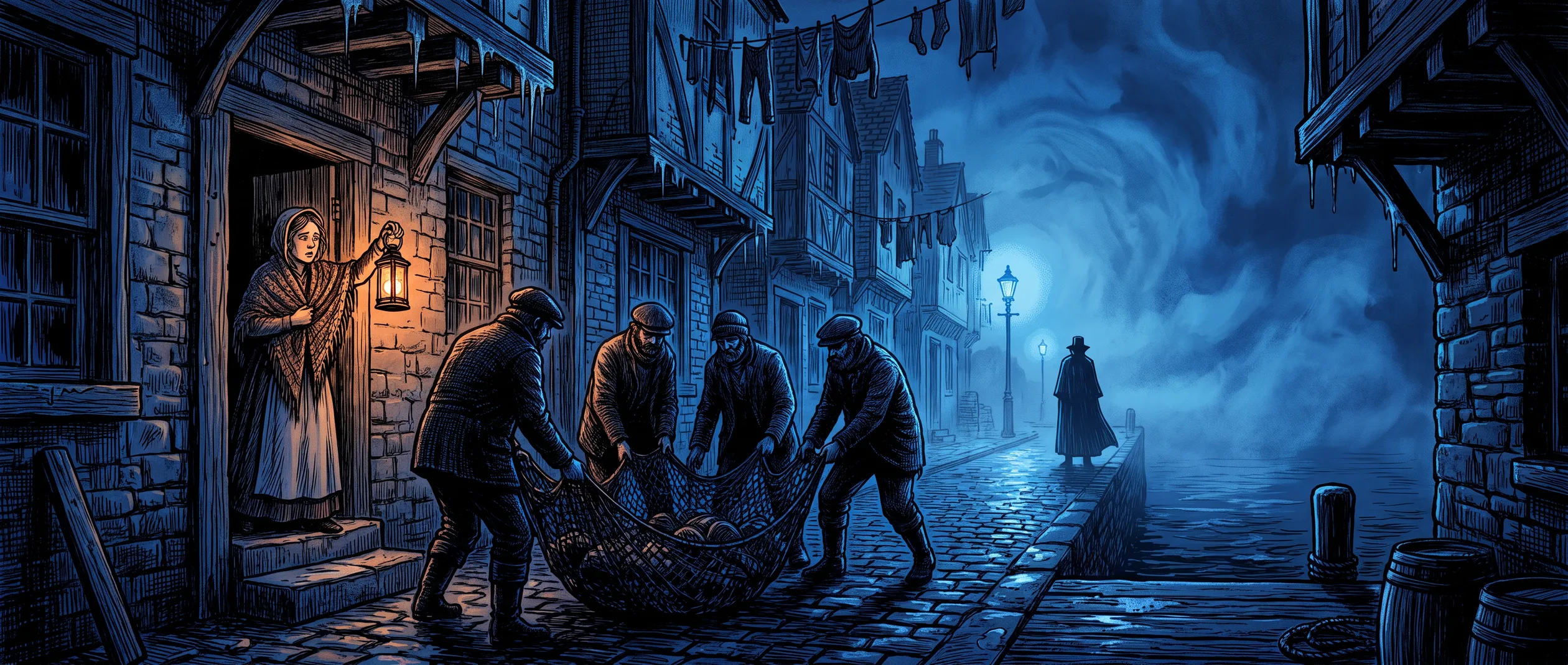
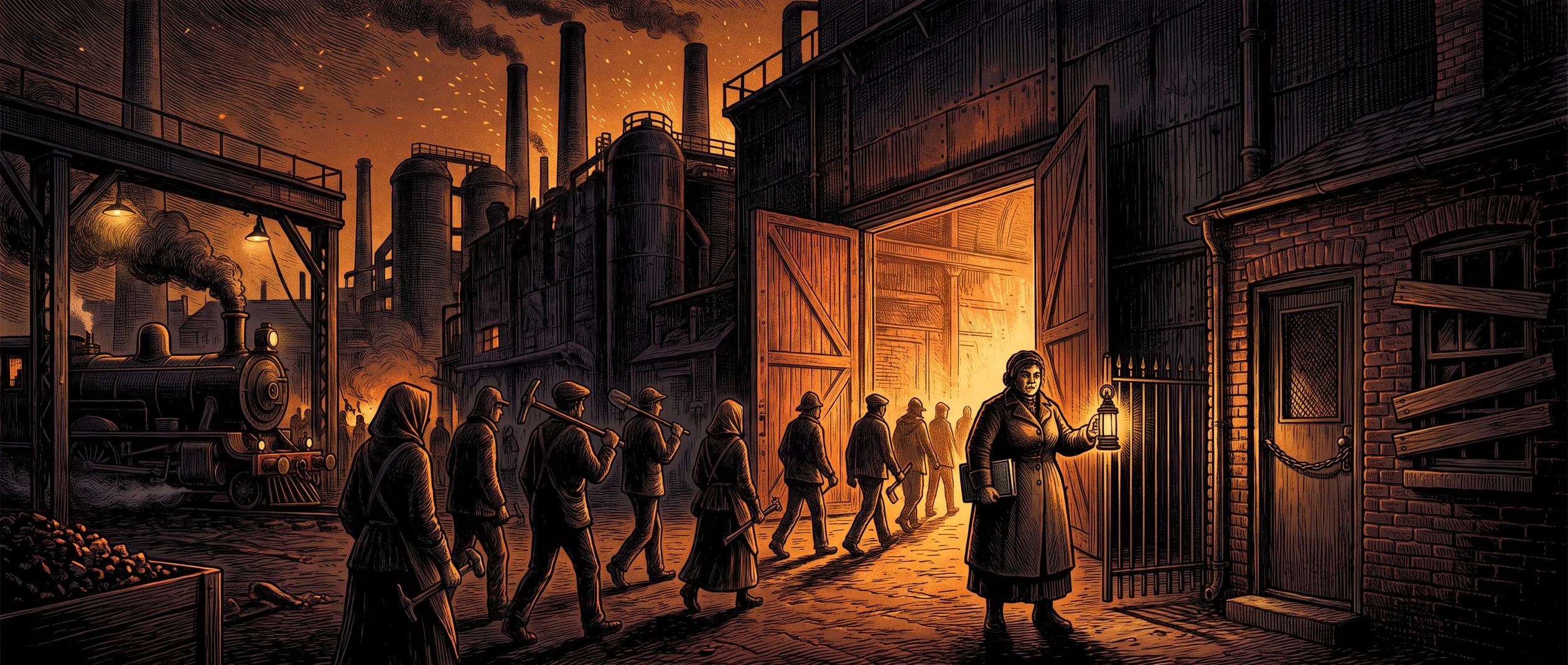
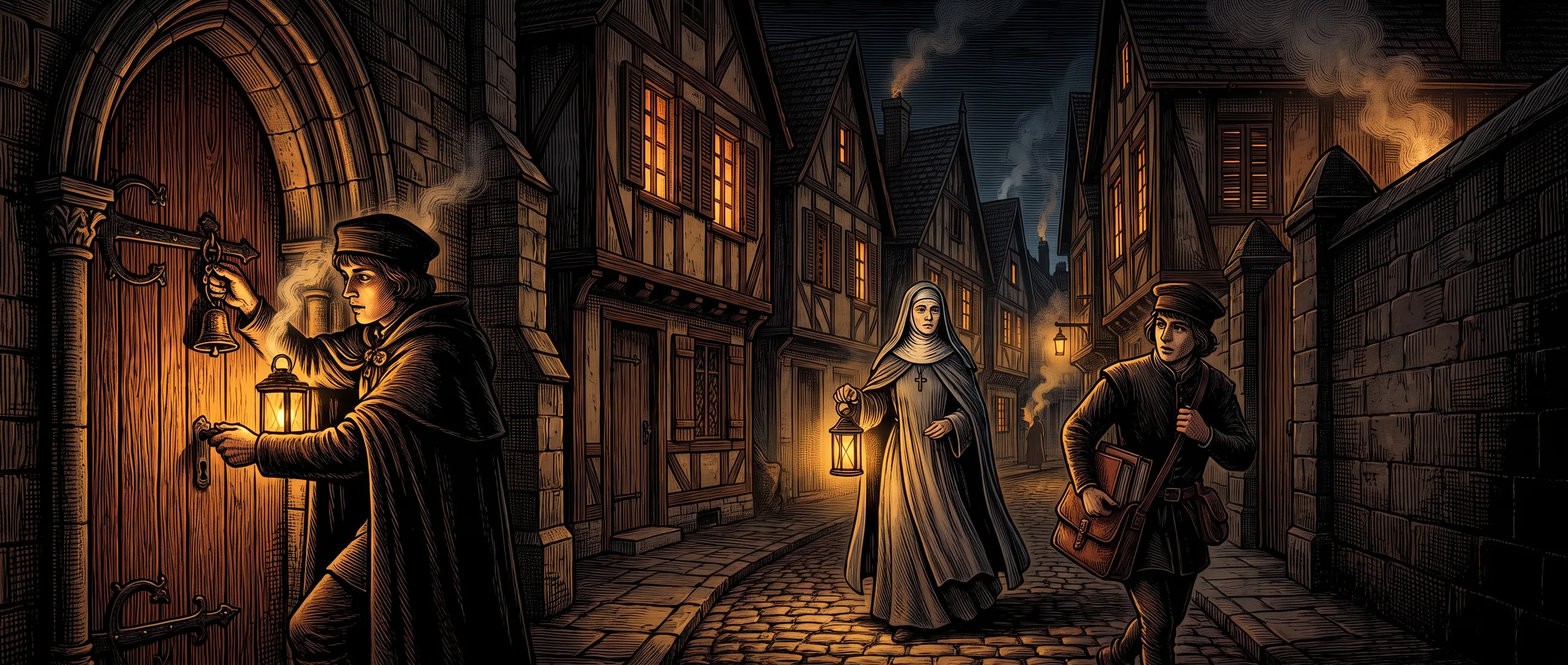
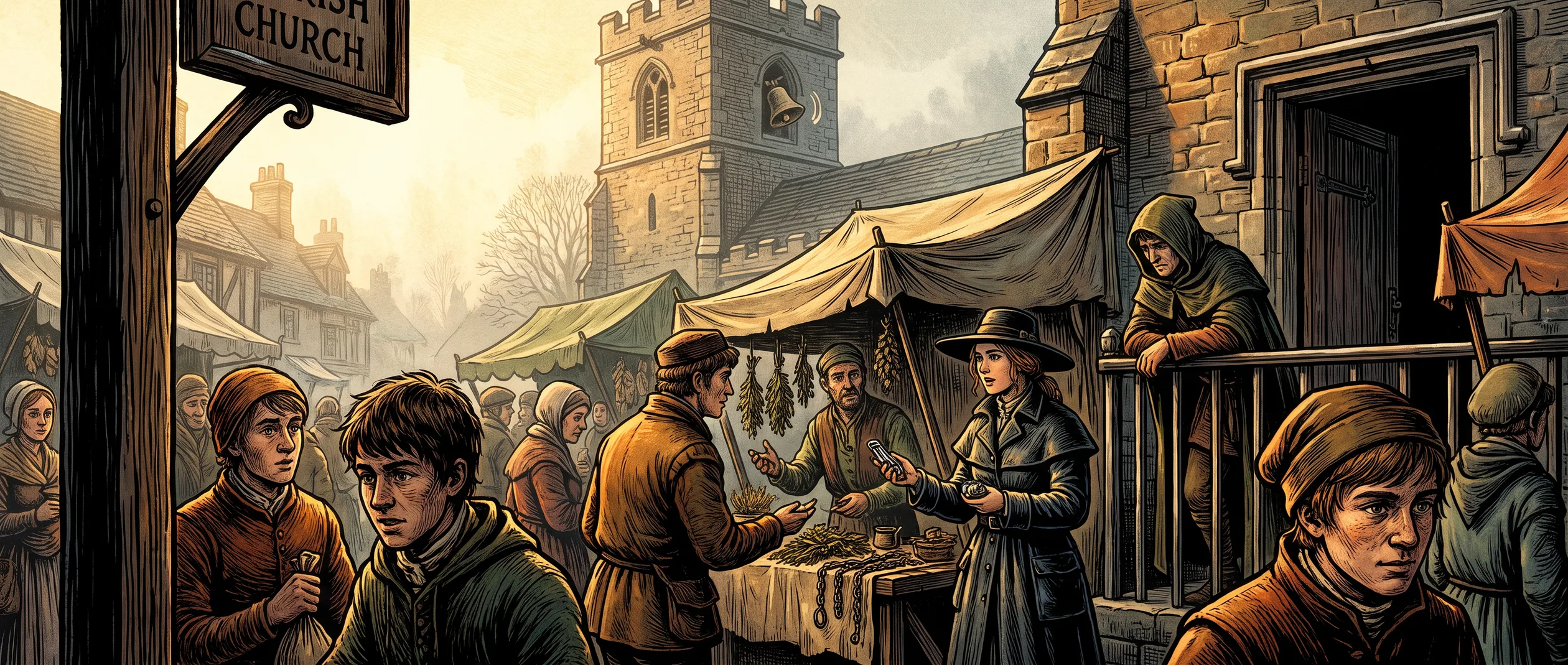
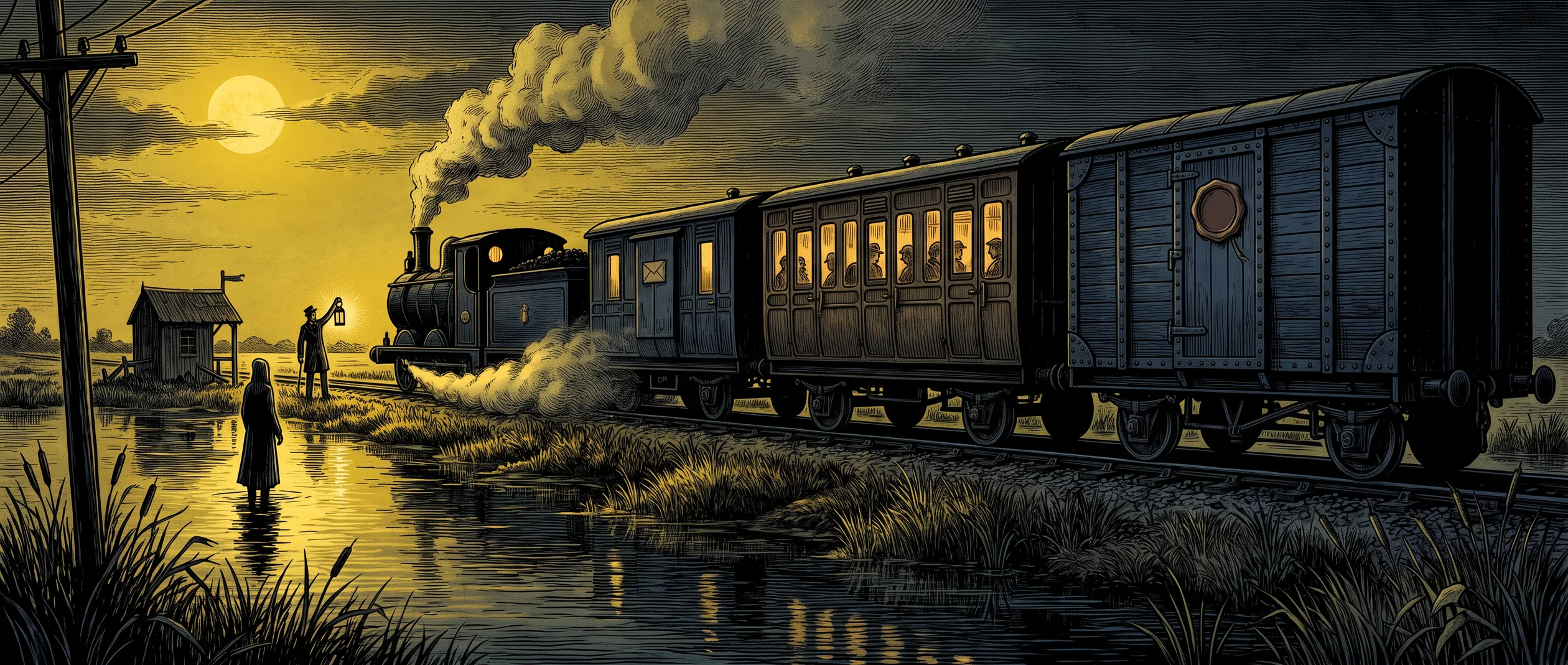
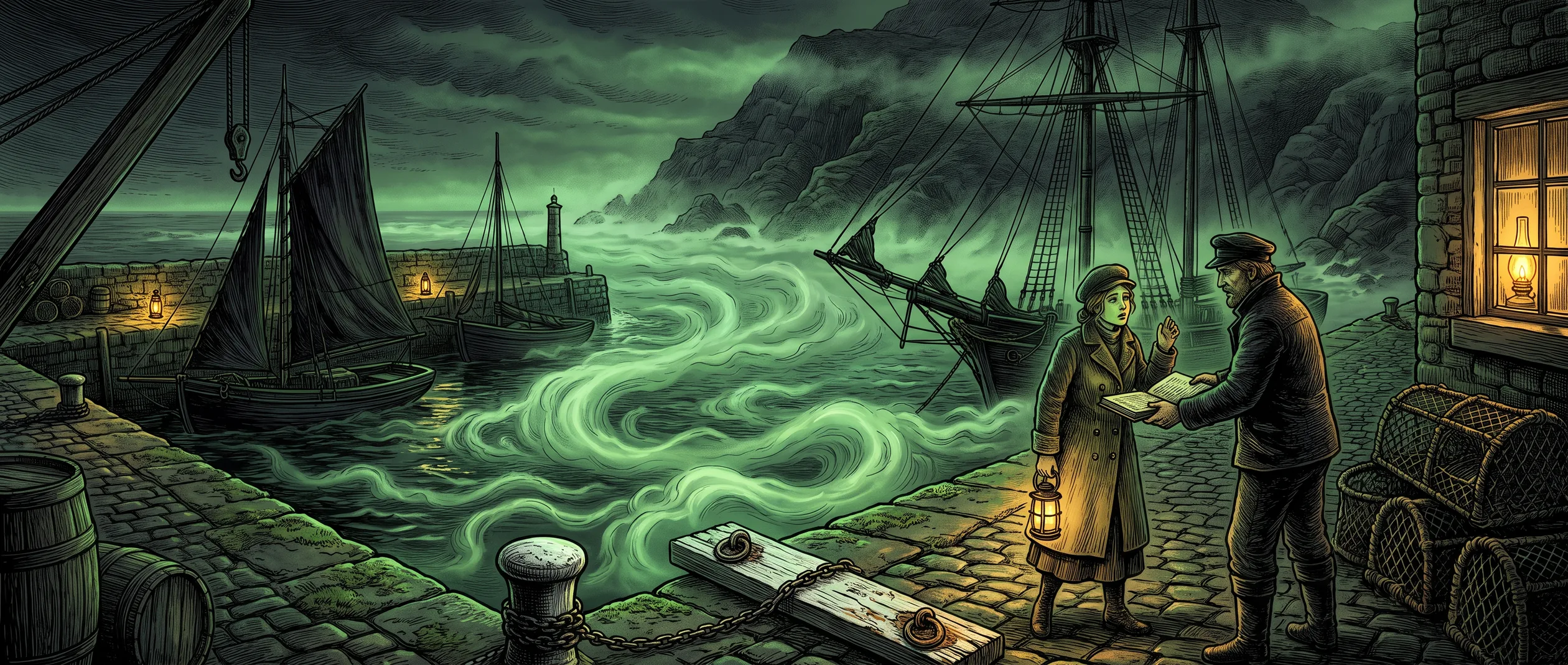
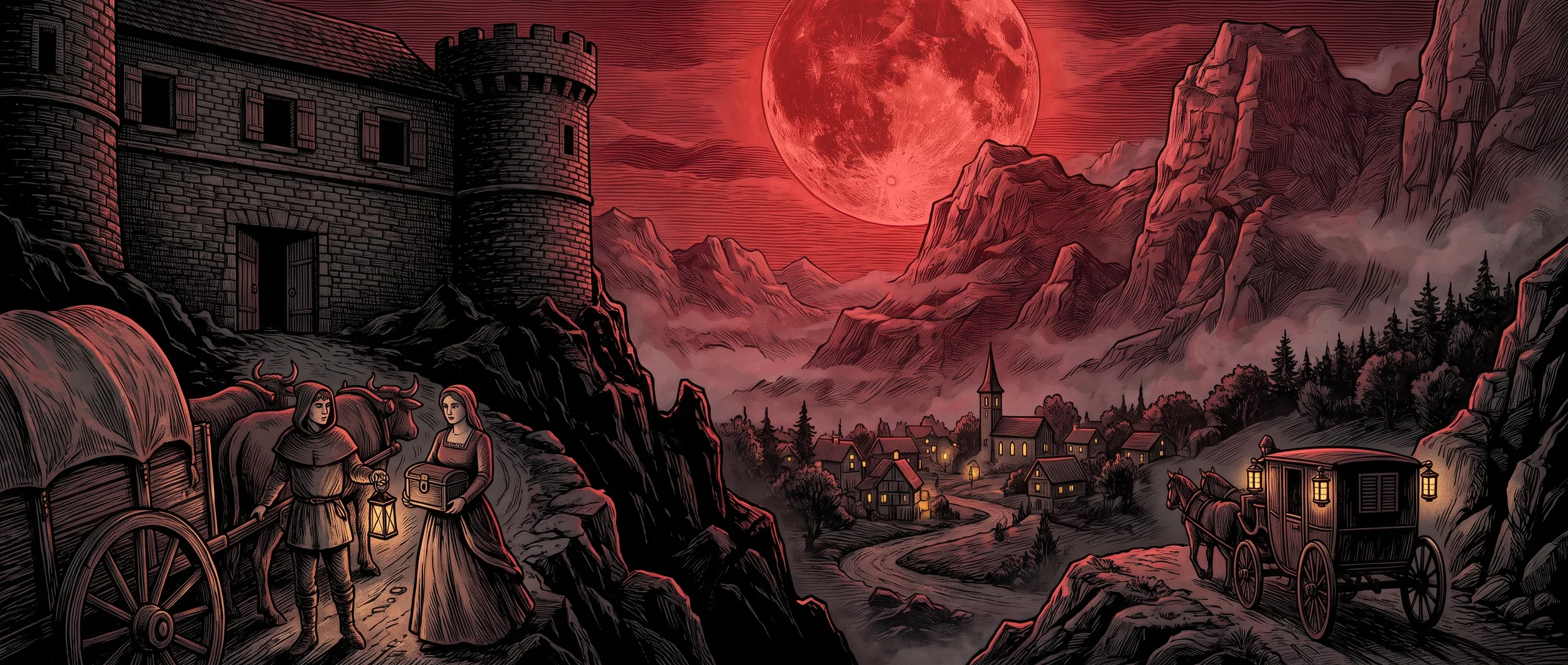
Four city quarters and the countryside beyond — moor hamlets, fen crossings, pit-towns on the coal seams, the wrecker coast. The rail and the coach roads stitch it together, and every parish keeps a locked church.
And where you begin is your choice. Nine anchors across the fog-bound city and the parishes beyond — the hunters’ order, the dockside underworld, the Church, the occultists, the decayed Houses, the anatomists’ cellar, an old seat on the crag, the asylum on the hill, the harbour with its curtains drawn — each opens a different corner of the long dusk. You pick where your first hunt opens (the Lantern Watch is the default); take a monstrous heritage — Vampire, Werewolf or Hollowed — and you begin AS the hunted thing, in the consequence, with six dark ways in of your own.
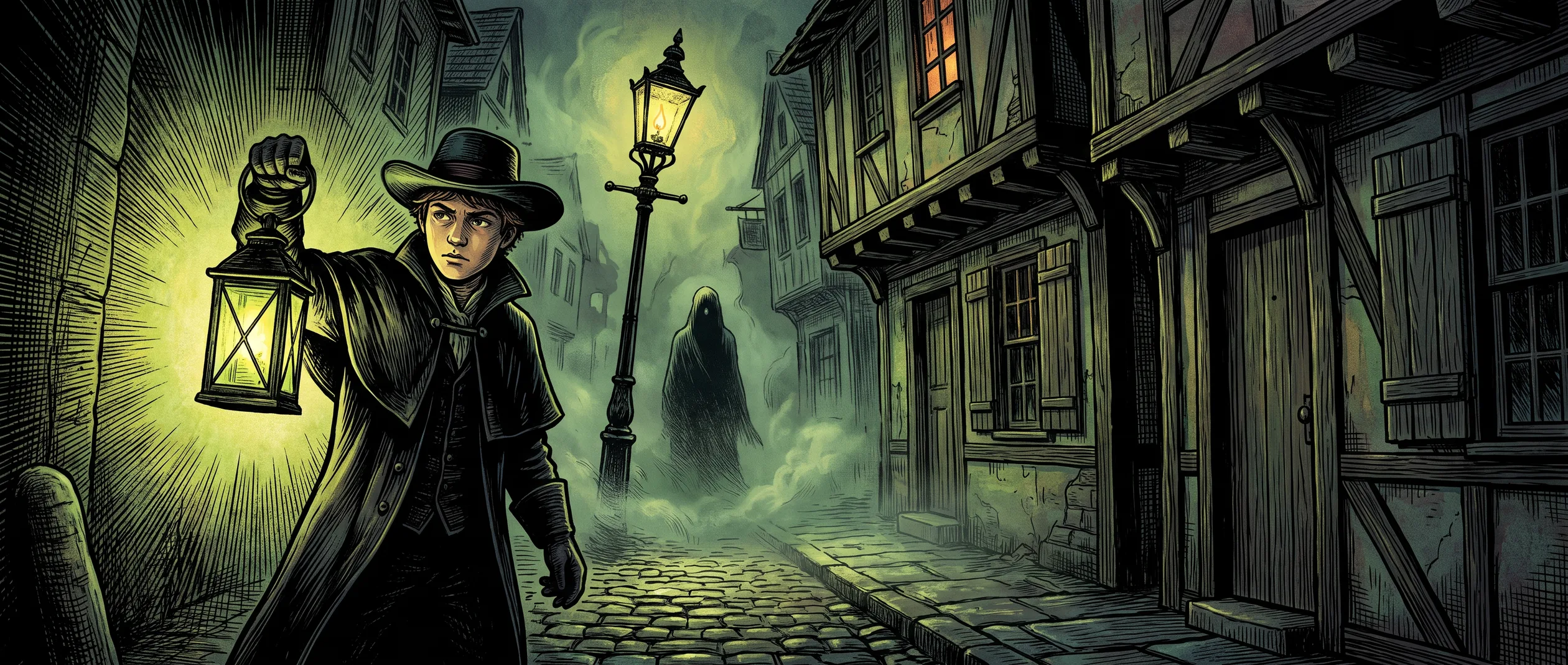
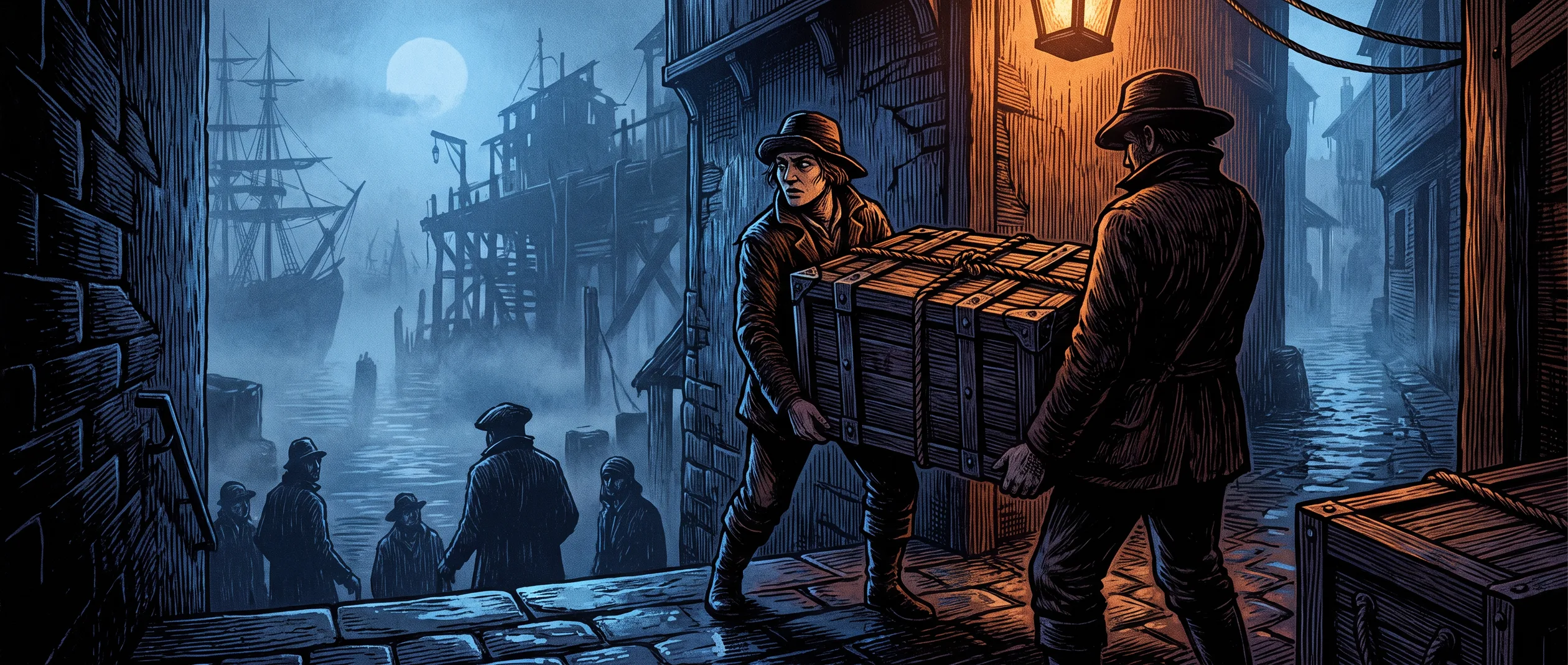
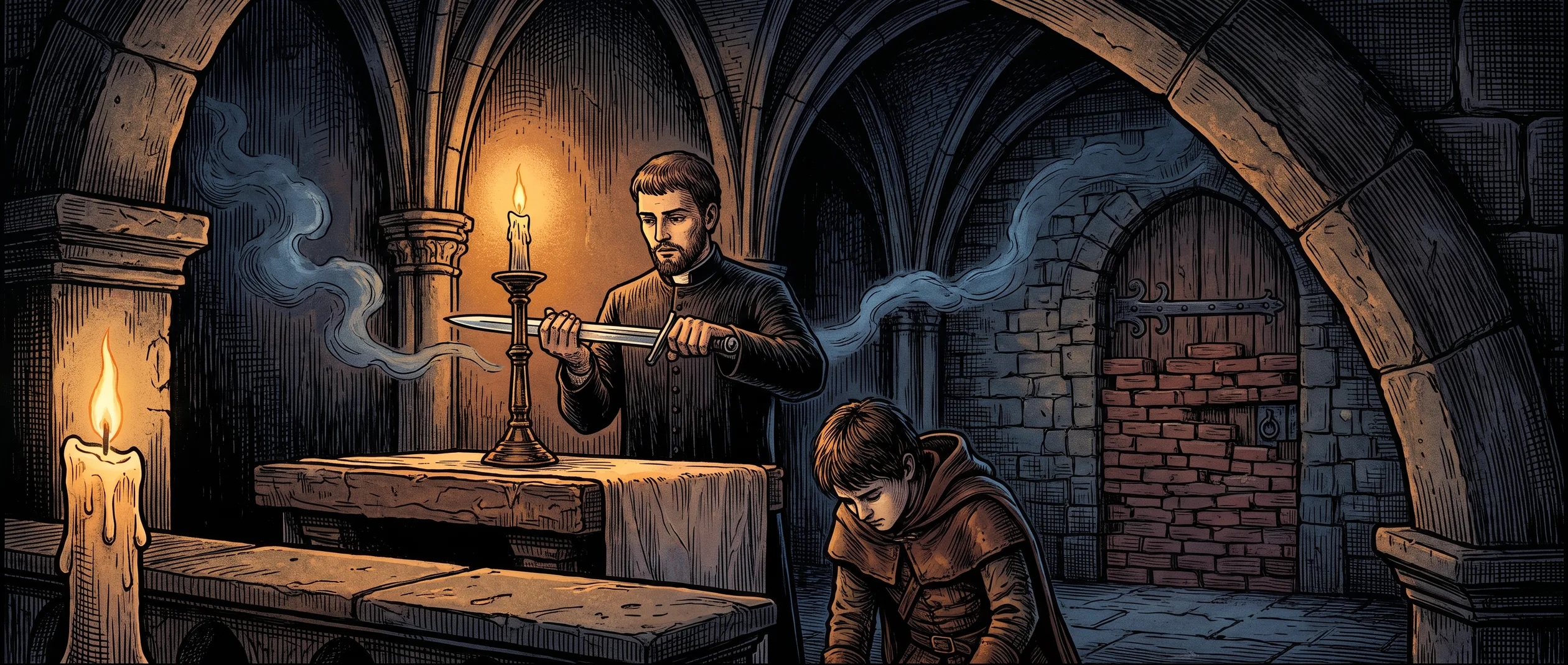
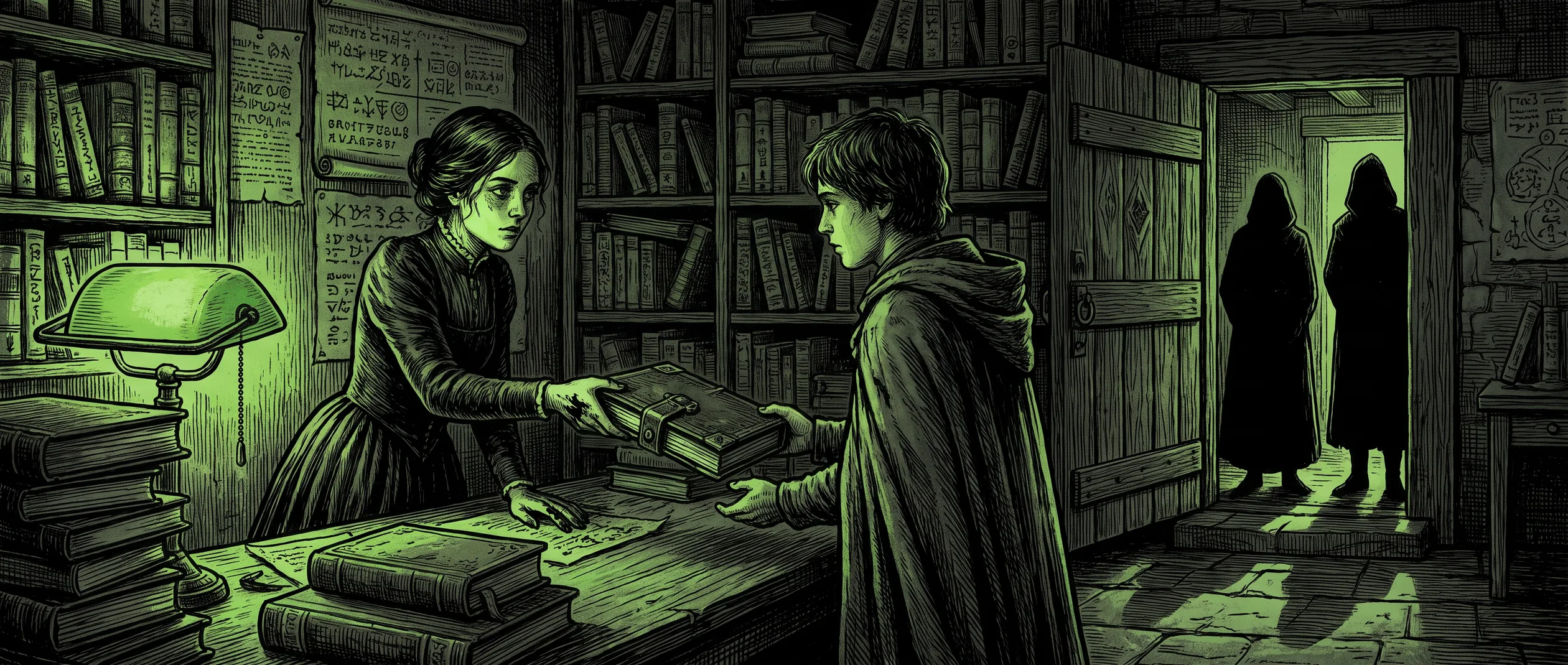
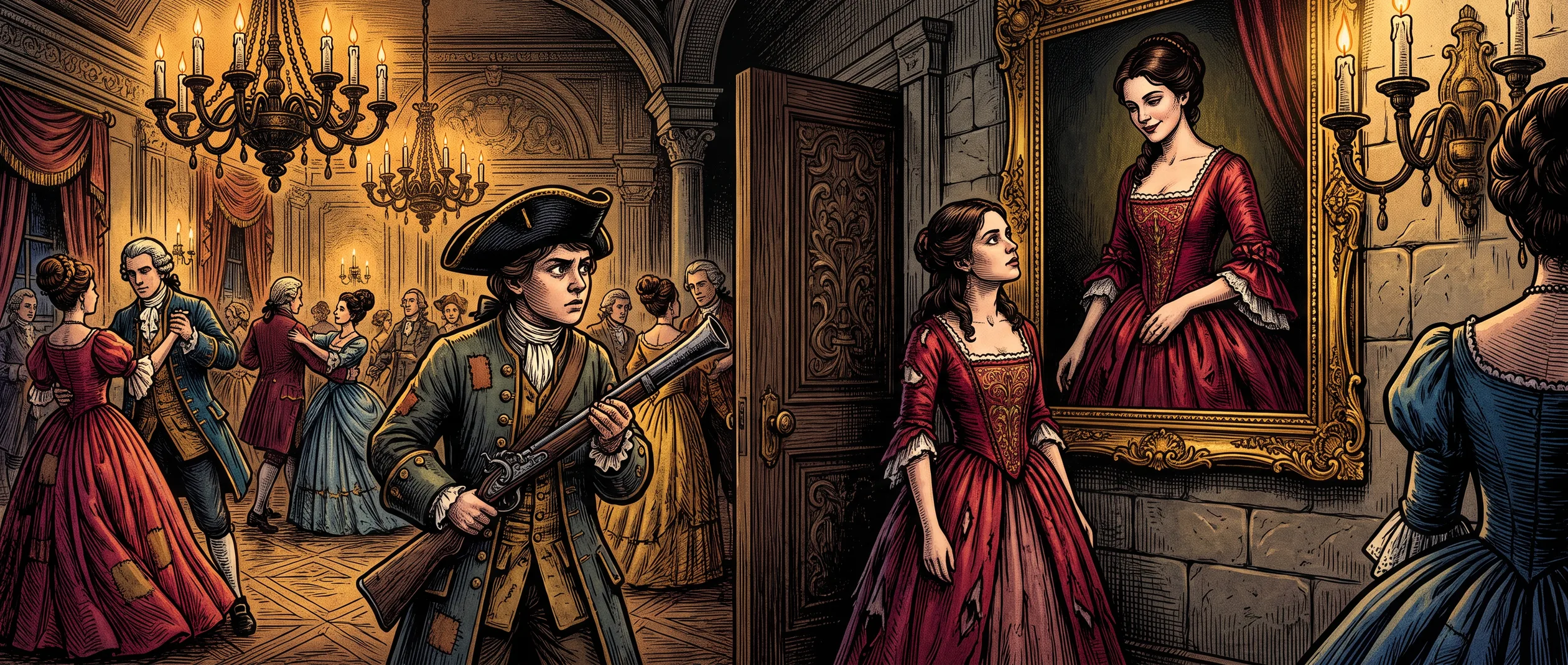
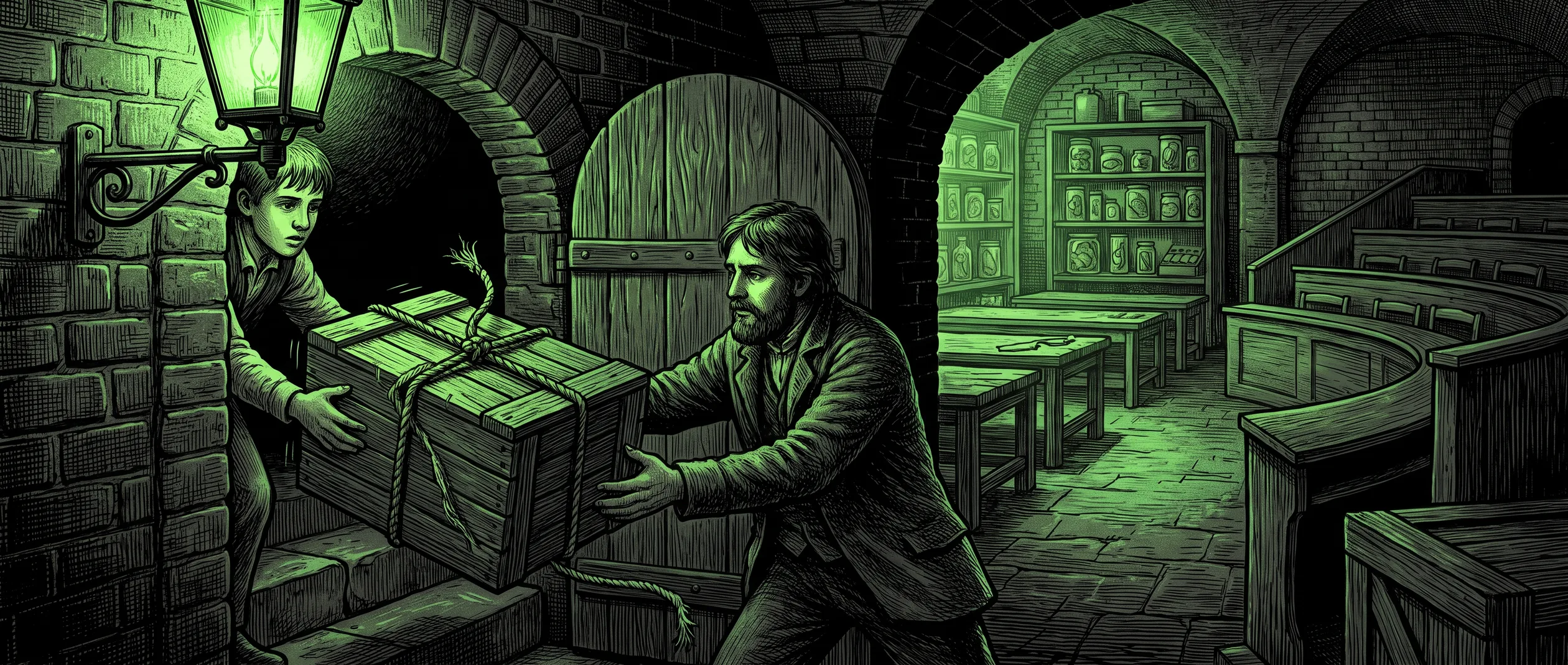
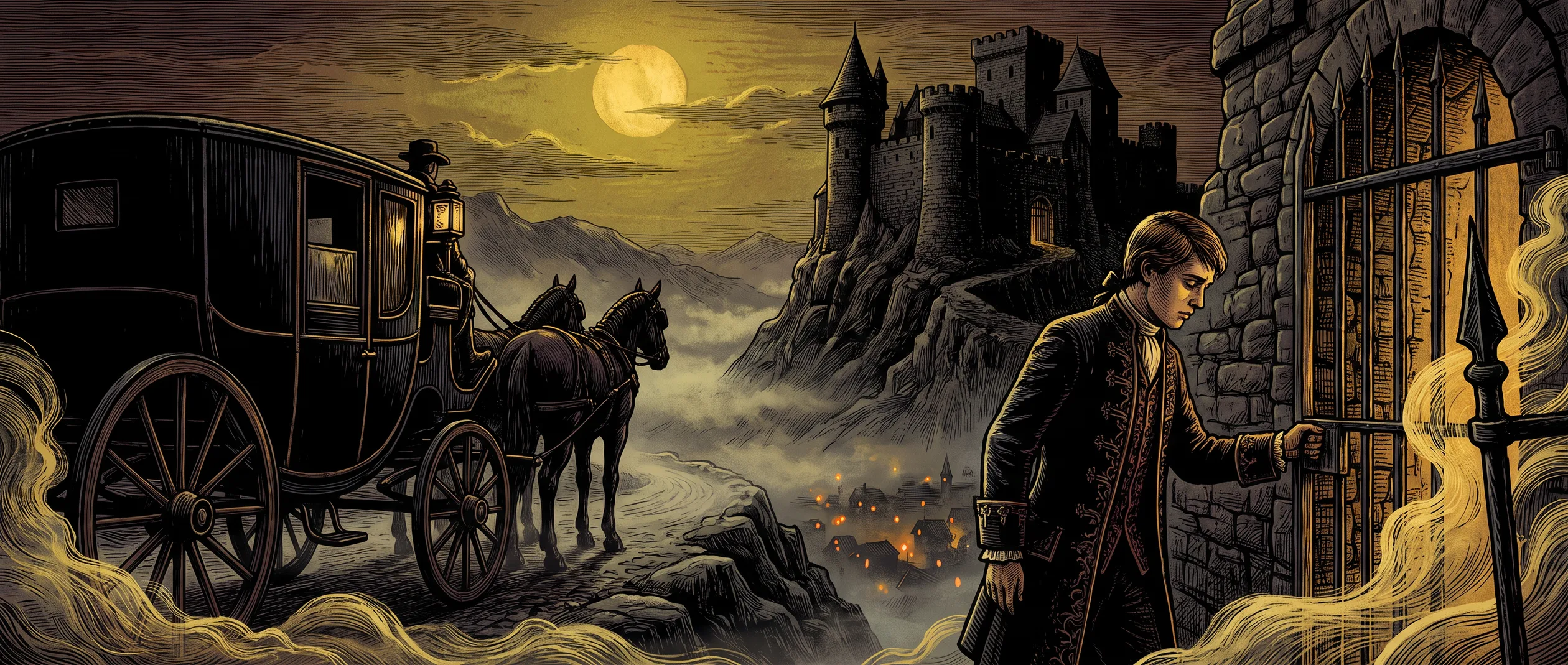
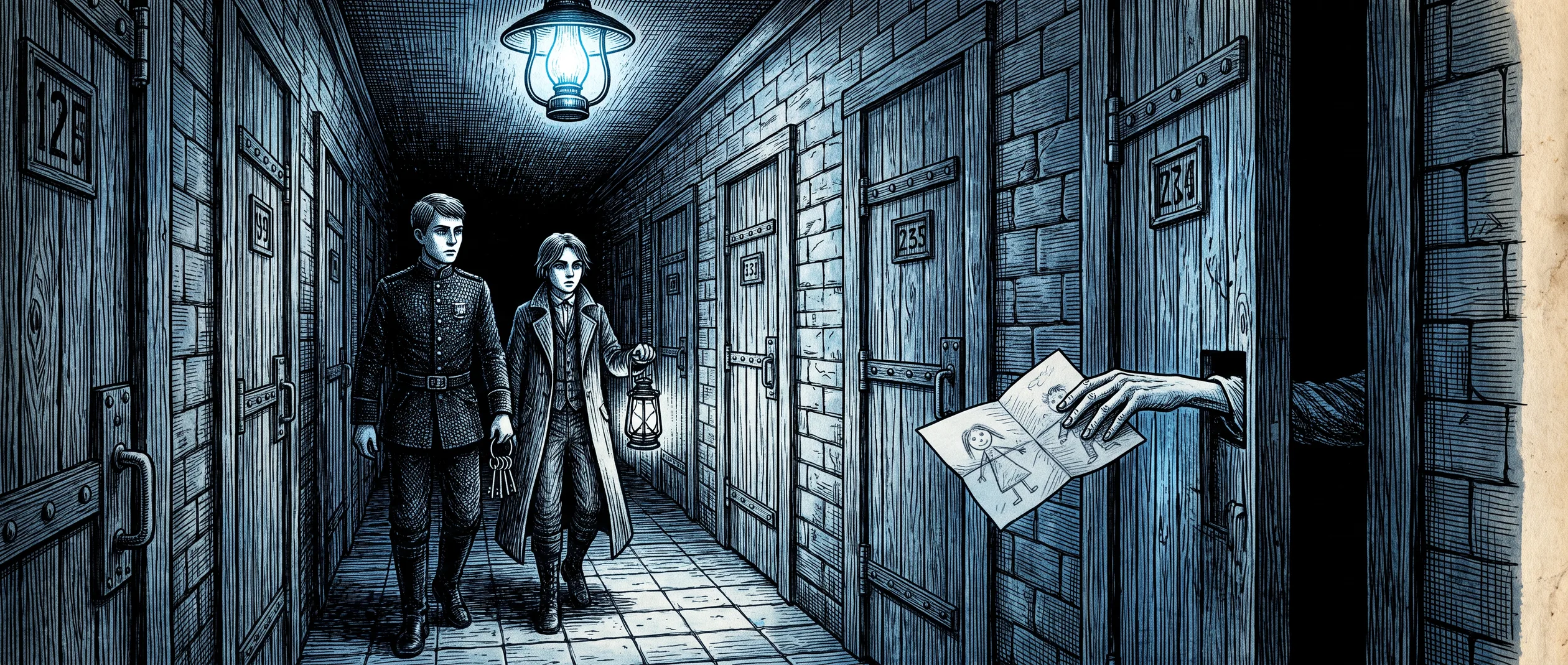
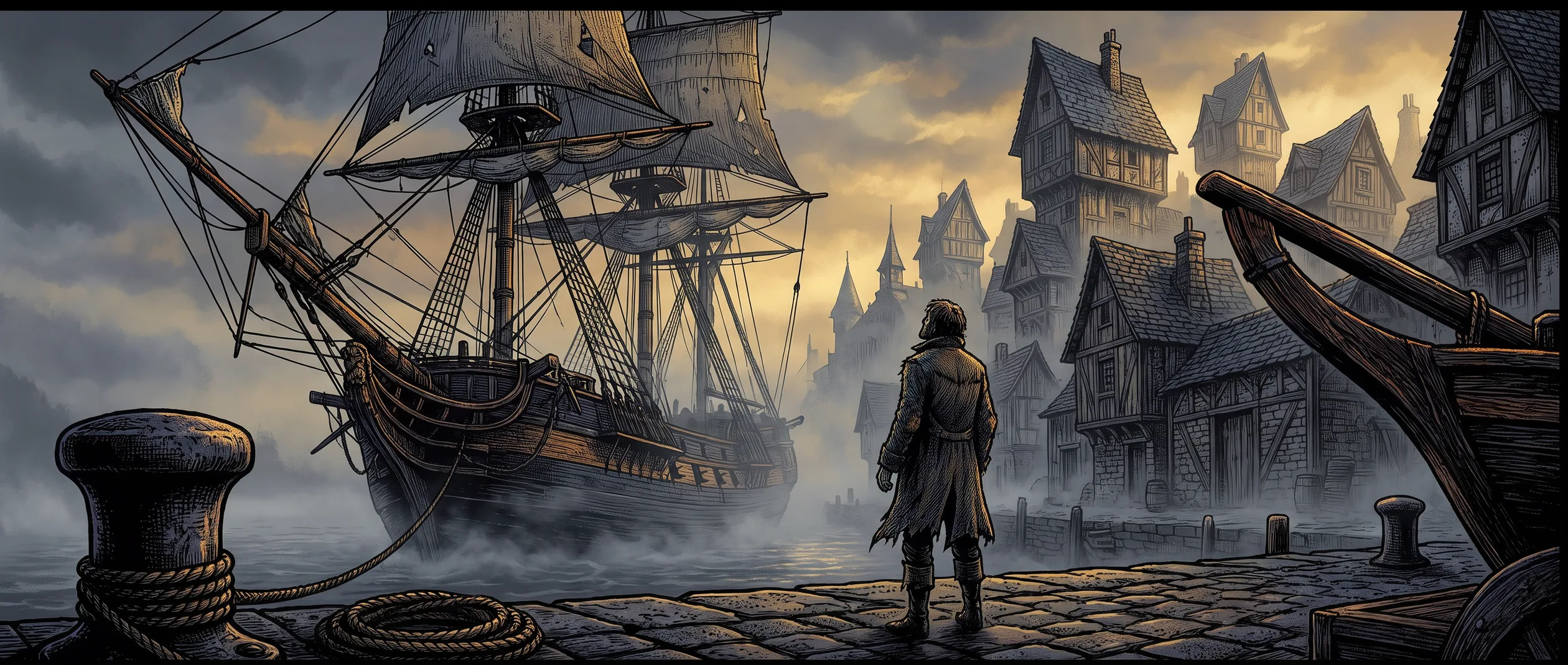
Nine ways into the long dusk — the mortal nine. (The three monstrous heritages open elsewhere, at a wound of their own, chosen session-zero.)
The trade
You do not fight it. You hunt it.
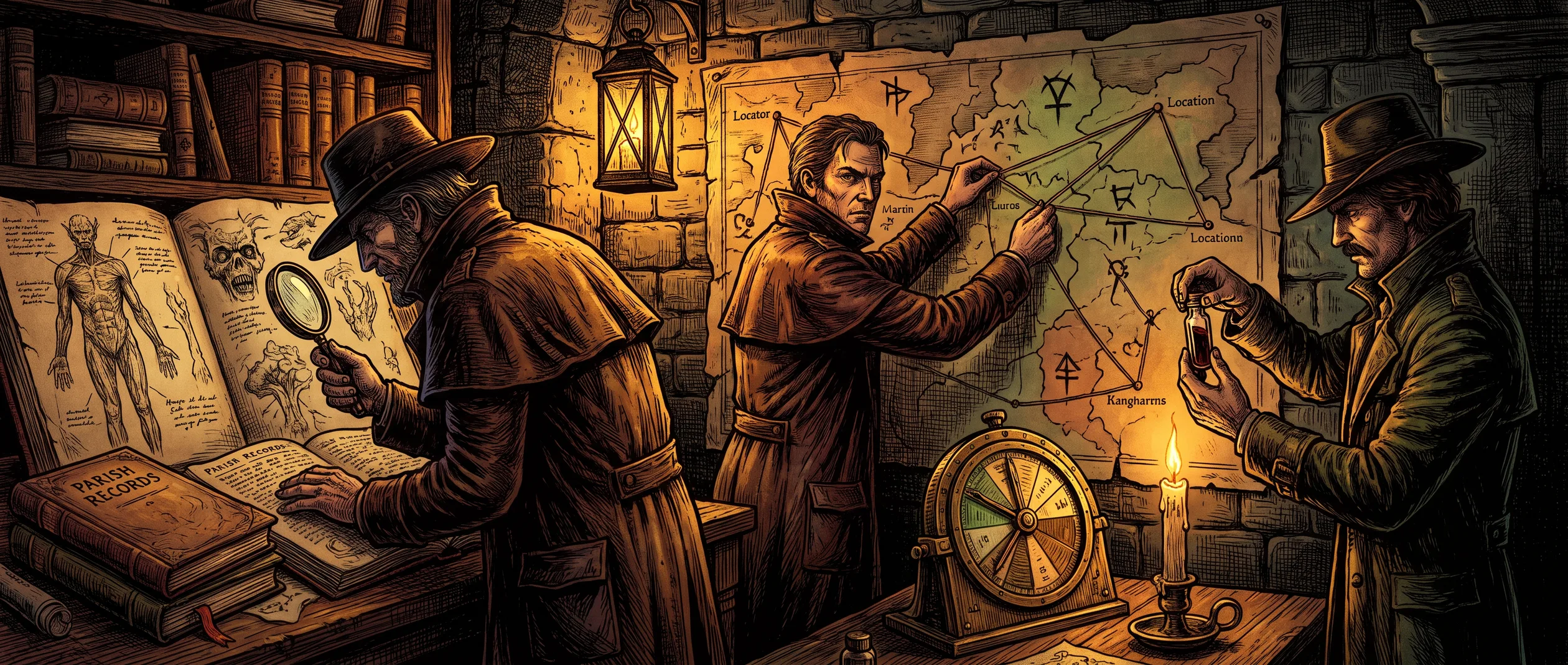
The fantasy of Mournwick is not raw power — it is the HUNT. You meet a thing you cannot kill, you survive it, you learn what it is, and you come back prepared. A monster shrugs off the wrong weapon and knits its wounds shut; only its bane lands the killing blow. So the hunt is won by daylight — the registry read, the survivor interviewed, the victim examined, the silver bought and blessed — and the night is where the answer is delivered. Halfway through the research the truth arrives plainly: steel will not do it. When the work is done, the bane has a name — and the hunt turns.
And losing to the dark is never just a beating. The dark collects: it has your scent now, or it left something in the wound, or it does not kill what keeps — or your bane gear is simply gone, torn away and swallowed, and you re-arm before the rematch.
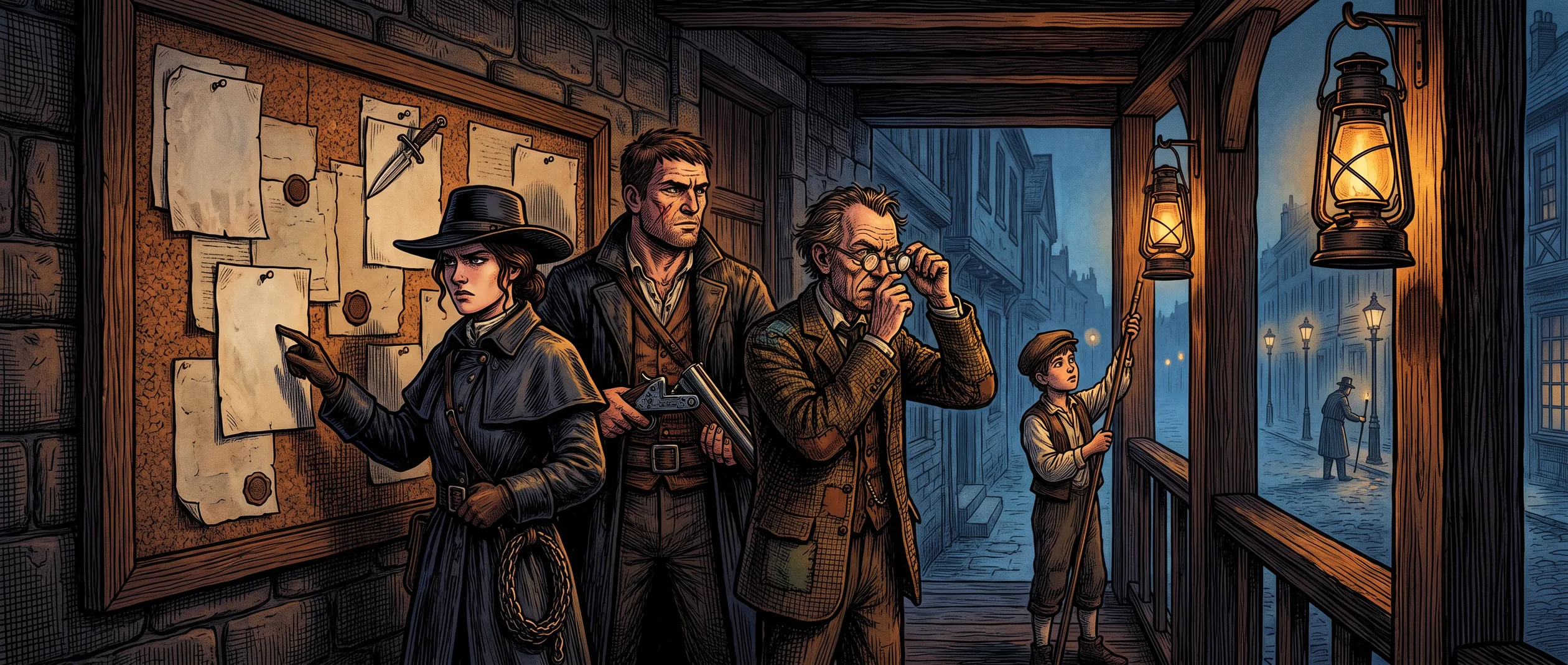
Every posting on the Lantern House porch is wrong somewhere. The wrongness is the adventure — the posted purse pays on the posted quarry, but the truth behind it is worth more, and a poster who lied about the quarry owes more than the purse, and knows it.
What drives it
Dread, and the bane you must find
Dread runs from 0 to 10, raised each time a hunter witnesses the truly wrong, fails a save against terror, or draws on a dark gift, and it breaks them entirely at 10. The weakness engine gives every true horror a bane, a damage tag (silver, holy, wood, iron, fire) that deals full damage, lands the killing blow, and stops regeneration, while mundane steel is merely halved and can never finish the job. You cannot kill what you do not understand.
Dread runs 0–10 — what each band costs you
- 1–3: unsettled — the GM applies disadvantage on fear saves (vs frightened, a horror's presence); the engine sets no condition in this band, so nothing here rides the dice on its own
- 4–6: shaken — the `shaken` condition is applied AUTOMATICALLY on crossing into this band and stays while Dread is 4+ (attack disadvantage; it lifts when Dread falls, NOT when the hunter steadies for a turn), AND the GM applies disadvantage on fear saves
- 7–9: haunted — as shaken, AND the GM applies disadvantage on perception + investigation (skill-scoped: the engine cannot call it, so it is yours), AND one FALSE detail per scene the GM never flags as false
- 10: Dread hits 10 - the hunter breaks. The GM resolves their fate (a flight into madness, a catatonic collapse, or worse - a soul the dark has claimed).
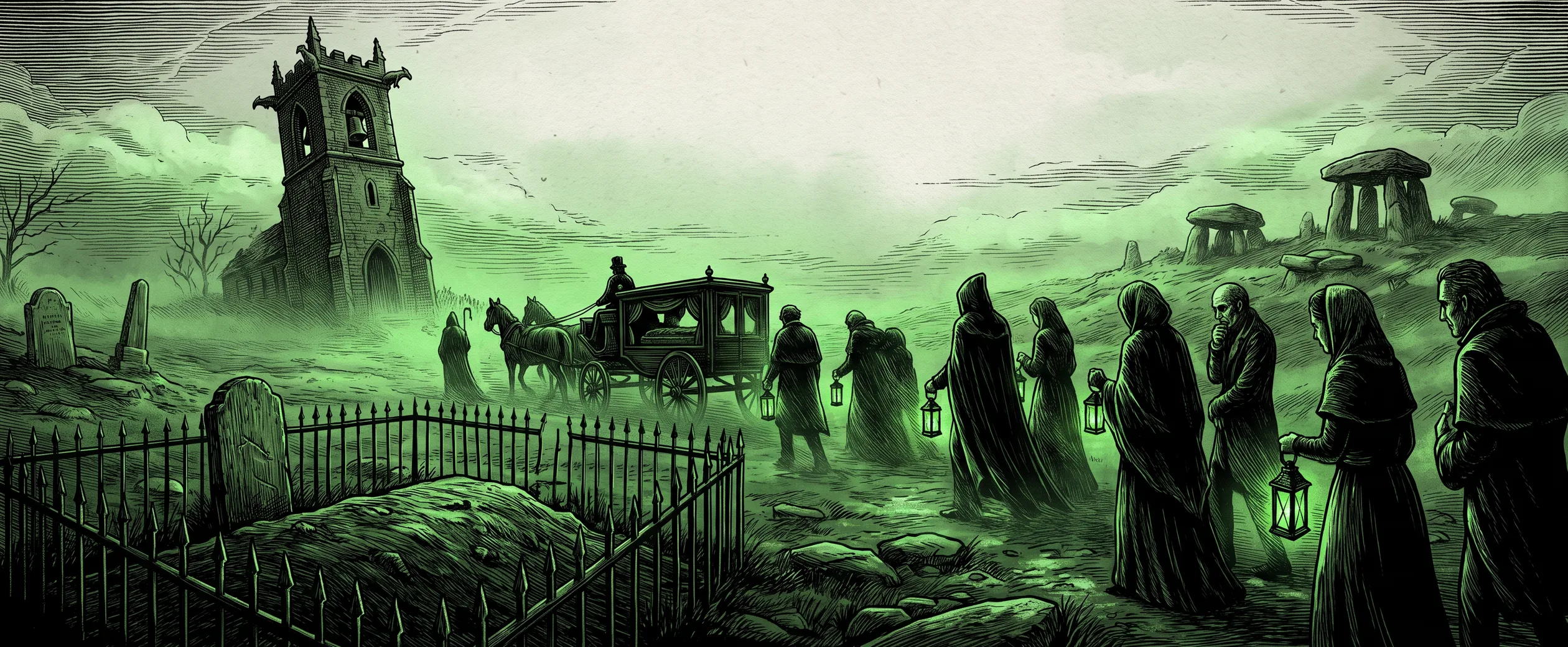
The dark here does not roar. It keeps books: one name a quarter in the pit ledgers, one dinner guest a season at the oldest table, a harbour berth marked “never let” in a hand nobody alive wrote. And when at last it speaks — through a séance table, through a host’s mouth mid-exorcism — it knows your name.
How it plays
The systems you can ask for
These mechanics are original to Mournwick — you will not know them from any rulebook. Read them here, then simply ask your gamemaster for any of them at the table; the engine owns every tracked number, and your gamemaster plays out the rest.
What playing here costs: a fight you lose is a fight you lost — winding the story back at all spends Mournwick’s own Hourglass of the Second Hour, and there is no other way to undo it. Beyond that, what you carry is weighed, a night away from a roof eats a ration, breaking off from a fight gives your enemies a free swing, and a camp in the open is exposed. You never have to shop for food, though: passing through anywhere that sells it, your gamemaster tops the packs up for you and pays for it out of your own purse — so the coin moves without you asking, and the ledger always says where it went. None of that can be switched off, which is what makes the numbers here worth anything - the sprawl's rent and the Lifeline contract are the only two things you choose.
Every role commits to a calling as it grows — Oathbound Slayer, Anatomist of Terror, Pact-Keeper, Greycoat Veteran, and more. See every path ↓
“Steel teaches a monster nothing. Silver teaches it fear.”
What the fog kept
Read what the fog kept
What play actually feels like — one scene of a real session, gamemaster and player, every number the engine’s own.
Past the veil
Two ways of reaching through
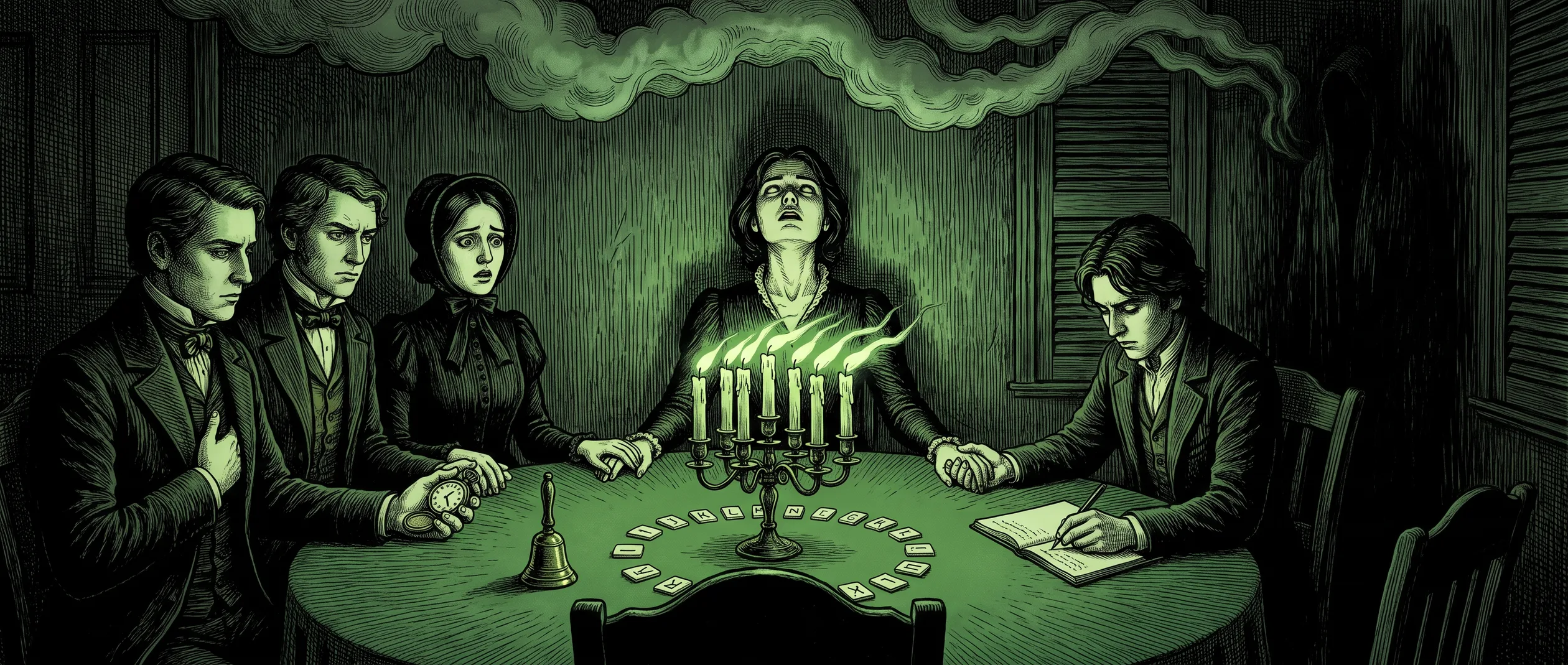
The occult here is real, studied, and priced. The Art is the Occultist’s discipline — wards, banishment, binding: a sketched glyph that turns one blow of the supernatural, a circle of salt nothing unholy crosses, a rite that catches a witch’s curse mid-flight and sends it home. The Sight is the Medium’s — the work of the dead: a corpse’s last minute relived through its own eyes, a place’s restless dead rising to point one finger at their killer. Reaching past the veil frays the mind: the price is paid in Dread.
The great rites are group work, in a room where something pushes back. A séance that fails does not go silent — the spirit LIES, or something else answers, and what it says is bait. A warding is raced against the thing breaking in. And the Sept’s exorcism is hours of prayer against a thing that fights back through the host’s mouth — and it knows your name.
Against all of it stands the Sept of Ash: sanctified faith is one of the few sure answers to the dead-that-walk. Faith does not fray the mind the way the Art does — but it asks conviction, and a Sister who loses hers loses the prayers until she finds them again. Sanctified ground holds. That is why every parish learns to lock its church before dark.
Who you can be
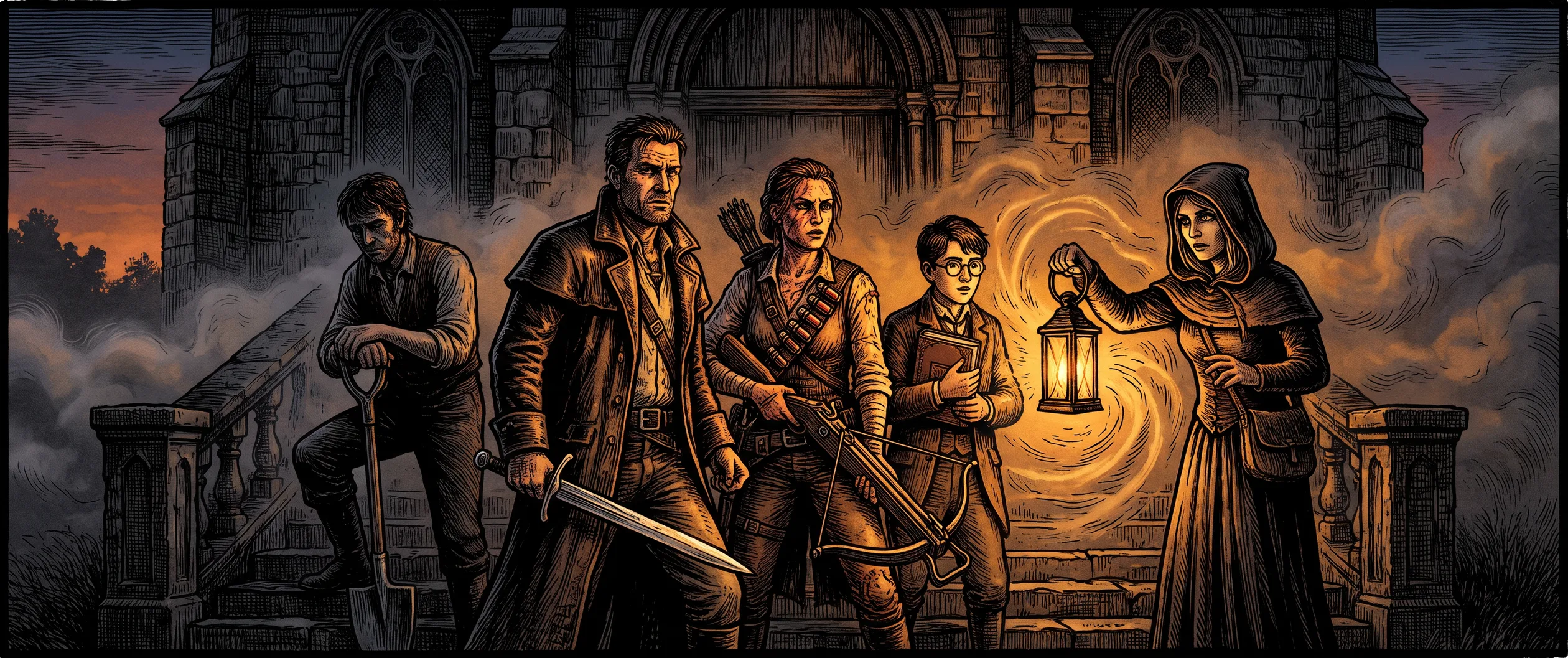
11 heritages
Where you commit
Every path your role can take
Every role here is original to Mournwick, and each one commits to one of two callings at level 6 — an earned milestone, not a starting pick. You pick the path you want, and its features unlock as you climb (levels 6, 10, 14, 18). Committing also grants a signature gift — a piece of gear, and some Pounds to go with it, that marks the path. This is every path in the world, so the moment you start you already know where you can be headed.
And a second road, if you want one: from level 2 you may spend any level-up on a second role instead of your first, and keep climbing both. It asks something of you: 13+ in the deciding ability of the one you hold and the one you take, checked by the engine at the moment you ask — a refusal is a refusal, not a suggestion. It is a trade, not a bonus: your levels split between the two, so at character level 6 you stand at 3 and 3, not 6 — and the deep features of each road (the ones at 6, 10, 14 and 18) come far later, or never. Breadth now, paid for in depth. Blending two is a Premium feature; a single road is free and complete.
The features are named here; ask your gamemaster what each does in play — and the signature gift most paths grant carries a real, counted charge: spend it and the dice remember until it comes back.
Hunter Oathbound Slayer · Quarry-Hound
Oathbound Slayer
A blade-bearer sworn at the Watch's altar, who anoints steel in holy water and hunts the unclean beneath a covenant that drinks his strength as its tithe.
- L6 Consecrated Arms — When you choose this path at level 6, your understanding of the holy bane goes deeper than doctrine — you know the old rites that make steel an instrument of the Church's wrath. As a bonus action, you may anoint a weapon you are holding with a vial of holy water or a pinch of sacred salt (consuming the material component); the weapon gains the holy tag until the end of your next short or long rest, or until you sheathe it. While wielding a consecrated weapon, your attacks against undead and cursed beasts deal an extra 1d4 damage and count as holy for the purpose of bypassing their resistances. You may consecrate a number of weapons equal to your proficiency bonus before needing to resupply your anointing materials.
- L10 The Hunt Calls — At level 10, the divine mandate that drives you becomes a physical force your quarry cannot outrun. Whenever you open a hunt clock against a creature whose bane is holy or silver, the clock begins with one segment already filled — the Church's will is already written. In addition, once per hunt, when you confirm the bane of your quarry (the hunt clock fills), you may speak a short oath as a free action; for the remainder of that hunt your weapon attacks against that named quarry deal an extra 1d6 damage, and for 1 hour the quarry has disadvantage on saving throws against effects you impose. The extra damage ends the moment the quarry is slain, escapes beyond your pursuit, or the hunt clock is closed.
- L14 Anointed Strike — At level 14, your consecrated blows carry the full weight of the Lantern Watch's oldest covenant. Once per fight, when you hit a creature that has a known holy or silver bane with a holy-tagged weapon, you may declare an Anointed Strike as part of the attack — the hit deals an extra 4d8 damage, the target must make a Constitution saving throw (DC 8 + your proficiency bonus + your Wisdom modifier) or be stunned until the end of its next turn, and if the creature regenerates it cannot use that regeneration until the start of your next turn. You may use this feature once per fight, recharging on a long rest.
- L18 Death-Sworn — At level 18, you have sworn yourself to the hunt so completely that death itself hesitates before you — though it keeps an account. When you drop to 0 hit points during a fight against a creature whose bane is holy or silver, you may make a final Wisdom saving throw (DC 15); on a success you instead drop to 1 hit point, immediately make one weapon attack against the creature that downed you, and that attack automatically deals maximum damage if it hits. Regardless of success or failure, you gain 2 levels of exhaustion after the fight ends, and your Dread rises by 1 — the covenant extracts its tithe. You may use Death-Sworn once per hunt; it recharges only when you complete a long rest and spend at least one hour in prayer or at the Watch chapel.
Unlock gift (L6): Consecrated Blade — A sword blessed against the unclean; once per short rest, reroll one damage die against an aberration, undead, or fiend. (+40 Pounds)
Quarry-Hound
A relentless tracker who brands one beast as his own and follows its scent through fen and fog until the thing dies of being known too well.
- L6 Mark the Quarry — When you choose this path at level 6, you designate one creature you can see or whose trail you have discovered within the last hour as your Quarry — a free action outside combat, a bonus action in combat. Your Quarry is recorded in your hunter's journal; you have advantage on Survival checks to track it and on Perception checks to spot it, and your weapon attacks against it deal an extra 1d6 damage. The Quarry designation lasts until the creature is slain, you choose a new Quarry (replacing the old), or you complete a long rest without advancing the hunt. You may have only one Quarry at a time.
- L10 Relentless Pursuit — At level 10, no distance, door, or darkness lets your Quarry breathe easy. While your Quarry designation is active, it cannot benefit from the hidden condition against you — you instinctively know its direction (not its precise location) at all times within one mile, as though a cold thread ran between you. Additionally, when your Quarry takes the Dash action or uses any movement feature to increase its speed, you may use your reaction to move up to half your movement speed toward it without provoking opportunity attacks. You may use this reaction a number of times equal to your proficiency bonus per fight, recharging on a short or long rest.
- L14 The Moor Knows Its Own — At level 14, you have run the fens and the fog so long that the land itself seems to whisper the Quarry's path. Once per scene, you may spend 10 minutes reading the terrain — tracks, disturbed fog, a broken reed, blood on the frost — and make a Survival check (DC set by the GM based on how long ago the Quarry passed and how hard it tried to hide); on a success you determine the Quarry's current location with unnerving precision, learn one piece of tactical information about it (a wound, a lair feature, a companion), and the hunt clock advances by one segment. On a failure you still learn the direction it fled, but the Quarry is aware it is being read and the GM may advance one of its own clocks by one segment.
- L18 One Prey, One End — At level 18, you have faced your Quarry so many times that its rhythms are written in your blood. While your Quarry designation is active and the creature is below half its hit points, your weapon attacks against it score a critical hit on a roll of 18, 19, or 20. When you reduce your Quarry to 0 hit points, you may choose to not expend this calling's Relentless Pursuit reaction uses — the fight has cost you nothing you did not already spend waiting for this moment. Once per long rest, if your Quarry would escape or teleport out of your reach while below half hit points, you may declare the End as a reaction, raising your Dread by 1 — you unerringly close the distance, appearing adjacent to it regardless of intervening terrain. The Quarry may make a Wisdom saving throw (DC 8 + your proficiency bonus + your Wisdom modifier); on a success it escapes clean, but the use is spent either way. The GM may rule the follow impossible in specific supernatural circumstances, but mundane doors, fog, and distance never stop it.
Unlock gift (L6): Quarry-Brand — An iron brand that marks the hunted; once per long rest, gain advantage to track a creature you have wounded. (+40 Pounds)
Alienist Anatomist of Terror · Alienist of the Broken Mind
Anatomist of Terror
A cold-eyed mind-doctor who has dissected horror until it falls over him like rain on oilskin, naming each fear's lie aloud so the panicked may breathe.
- L6 Pathological Study — When you choose this path at level 6, you are the kind of Alienist who works with a scalpel as readily as a notebook. When you spend at least 10 minutes examining a slain creature or a freshly claimed victim — touching the wounds, noting the residue, reading the biology — you learn its bane (if it has one that can be known through physical evidence) without needing to advance the hunt clock, and you may add your Intelligence modifier to the next attack roll made by any party member against a creature of the same kind before your next long rest. You may also perform this examination in the field during a short rest. You may grant this bonus a number of times equal to your proficiency bonus per long rest.
- L10 The Beast Holds No Surprise — At level 10, the catalogue you have built in your mind is so thorough that a monster's terror-display washes over you like rain over oilskin. You have advantage on saving throws against the abilities of any creature whose kind you have previously examined with Pathological Study or encountered and survived. Additionally, when a creature you can see uses a fear-inducing ability, a breath, a shriek, or any special action for the first time in a fight, you may use your reaction to shout a brief clinical warning to your allies — allies within 30 feet who can hear you may immediately reroll any saving throw they are forced to make against that ability and take the higher result. You may use this reaction once per fight, recharging on a short rest.
- L14 Dissection of Dread — At level 14, you have studied horror so long that you have mapped its architecture inside your own mind — and you can now rewrite the map for others. Once per scene, as an action, you may deliver a rapid clinical analysis of the threat to one creature you can touch — diagnosing their symptoms, naming the lie their fear is telling them. The target's Dread is reduced by 1, they remove the frightened condition if they have it, and they have advantage on Wisdom saving throws until the end of the scene. If the target is yourself, this feature instead reduces your Dread by 2 but you must succeed on a DC 12 Intelligence saving throw first, representing the cost of remaining detached enough to self-diagnose under pressure.
- L18 Cold Clarity — At level 18, your mind has been stress-tested by so many horrors that it has developed something the Church calls terrifying and you call useful: perfect, merciless detachment at the moment of greatest crisis. Once per fight, when you or an ally within 30 feet who can hear you drops to 0 hit points, you may use your reaction to invoke Cold Clarity — you do not panic, you do not mourn, you act. Until the end of your next turn, you have advantage on all attack rolls, ability checks, and saving throws; your Dread does not rise from any source. When Cold Clarity ends, your Dread rises by 1, and you become rattled (disadvantage on attacks until you steady yourself with a Resolve save, DC 10) as the suppressed weight of the moment lands. You may use Cold Clarity once per long rest.
Unlock gift (L6): Field Journal of Horrors — A catalogue of the impossible; once per long rest, gain advantage on a check to identify a monster's weakness. (+40 Pounds)
Alienist of the Broken Mind
A surgeon of the psyche who finds the fissures fear opens in a thinking skull and drives a wedge in, unmaking composure with one accurate, devastating sentence.
- L6 The Cracks in the Mask — When you choose this path at level 6, you have made a study of the fissures that fear opens in a thinking mind. As an action, you may study a humanoid creature you can observe for a moment and speak precisely to its deepest current anxiety — a cold, accurate sentence that peels back its composure. The target must succeed on a Wisdom saving throw (DC 8 + your proficiency bonus + your Intelligence modifier) or become frightened of you until the end of your next turn; on a failed save by 5 or more, it is also rattled for the rest of the scene (disadvantage on Charisma checks and Wisdom saving throws). Creatures with an Intelligence score of 3 or lower are immune. You may use this feature a number of times equal to your proficiency bonus per long rest, recharging when you complete a short rest.
- L10 Manufactured Calm — At level 10, you have learned that panic is a contagion — and so is the antidote. As an action, you may spend a moment of focused, deliberate calm to impose your Alienist's composure on a creature you touch. The target immediately makes a Wisdom saving throw (DC 8 + your proficiency bonus + your Intelligence modifier); on a failure it is charmed by you for up to 1 minute, regarding you as a calming authority and following verbal suggestions that do not endanger it. If the creature is already frightened when you use this feature, it makes the save with disadvantage. The charm ends immediately if the creature takes damage, witnesses violence, or you take a hostile action against it. You may use Manufactured Calm a number of times equal to half your proficiency bonus (rounded up) per long rest.
- L14 Fracture Point — At level 14, your knowledge of a broken mind is precise enough to find the exact crack and drive a wedge in. As an action, choose a humanoid you can see within 60 feet who is currently frightened, charmed, or who has already failed a saving throw against one of your features this fight — you have identified their fracture point. The target must make a Wisdom saving throw (DC 8 + your proficiency bonus + your Intelligence modifier); on a failure, it is incapacitated (it can move but cannot take actions or reactions) until the end of your next turn, and it has disadvantage on its next saving throw against a fear effect before the end of the scene. On a success, the target is shaken but unbroken — it has disadvantage on its next saving throw against any effect you impose. You may use this feature a number of times equal to your proficiency bonus per long rest, recharging on a long rest.
- L18 Architect of Ruin — At level 18, you can unravel a mind so thoroughly that it turns on its allies like a weapon you set down and walked away from. Once per long rest, as an action, you may attempt the full Alienist's operation on a humanoid you can see within 30 feet — a sustained assault of precise, weaponised observation delivered over one unbroken round. The target makes a Wisdom saving throw (DC 8 + your proficiency bonus + your Intelligence modifier). On a failure, you choose one of the following: the target believes its closest ally is the source of all its suffering (it attacks that ally on its next turn as if under a compulsion, then the effect ends), or it is overwhelmed by compounded Dread and is stunned until the end of its next turn, then frightened for 1 minute (it may repeat the Wisdom saving throw at the end of each of its turns, ending the fear on a success). On a success, the target takes 3d8 psychic damage as the attempt glances off a harder mind than you expected. Creatures immune to the frightened condition are immune to the compulsion option but not the stun-and-fear option.
Unlock gift (L6): Trephine Needle — A surgeon's pick for the mind; once per long rest, a creature you study has disadvantage on its next save against your effects. (+40 Pounds)
Occultist Pact-Keeper · Ward-Singer
Pact-Keeper
One who has signed a nameless compact with an Old Thing, drawing borrowed power from the fog beyond the window while it tallies every debt against the soul.
- L6 The Bargain Made — When you choose this calling at level 6, you bind yourself to one of the Old Things — a nameless compact written in sleeplessness and smeared ink. Choose one of the following boons; you may use it a number of times equal to your proficiency bonus, resetting at dawn. Each use raises your Dread by 1. The three boons are: (a) Dark Whisper — as a bonus action, force one creature within 60 feet to make an INT saving throw (DC 8 + your proficiency bonus + your INT modifier) or be hexed until the end of your next turn, suffering disadvantage on its next attack roll or saving throw; (b) Borrowed Tongue — as an action, you understand and speak any language for 10 minutes, and the creature speaking feels an inexplicable unease; (c) Unseen Hand — as an action, you move one object weighing up to 30 pounds up to 30 feet, or you open or hold shut one unlocked door or container. The Dread cost is not optional — the Old Thing notes every drawing.
- L10 Dark Benefaction — At level 10, your compact deepens. Once between long rests (and only once — the Old Thing will not be rushed), you may spend an Art spell slot as part of casting an Art spell to channel your patron's attention through it: the spell's save DC increases by 2 and, if it deals damage, it deals an extra die of that damage. When you do, your Dread rises by 2 — the surge of borrowed power draws the patron's eye, and something in the fog outside your window moves closer. If your Dread is already at 8 or higher, you cannot use this feature.
- L14 The Old Thing Listens — At level 14, the compact is old enough to answer in the night. Once per long rest, during a short rest or any quiet moment between scenes, you may put a question to your patron — a single question about a creature, place, or object you have encountered this session. The GM answers truthfully, but in the patron's voice: oblique, hungry, never without its price. After you receive the answer your Dread rises by 1, and until you complete a long rest you radiate a faint, cold wrongness — animals shy from you and children stare. Additionally, when you cast a spell of 3rd level or higher from the Art list, you may channel it through the patron rather than your own reserves; the spell then costs no slot. This trade may be made once per long rest and raises your Dread by 1.
- L18 Price of the Compact — At level 18, the Old Thing names its price — and you pay it. Once per long rest, as an action, you may open the compact fully: for the next 3 rounds your Art save DCs increase by 3, you may cast one Art spell per turn as a bonus action (in addition to your normal action), and any creature you hit with an Art spell must succeed on a CHA saving throw (DC 8 + your proficiency bonus + your INT modifier) or be frightened of you until the end of its next turn. When the 3 rounds end, your Dread rises by 4 — the patron has walked through you, and it does not close the door gently. If this brings your Dread to 10 or higher, the GM resolves the dark-path toll immediately: the patron takes something from you, narrated as a memory, a face, or a name.
Unlock gift (L6): Compact Seal — Wax stamped with your patron's mark; once per long rest, recast a 1st-level rite without its cost. (+50 Pounds)
Ward-Singer
A keeper of the old protective syllables who chants circles of binding into stone, naming a thing to hold it fast and raising wards no fire can break.
- L6 Warding Circle, Extended — When you choose this calling at level 6, your Warding class feature improves: the circle can now bar a second named creature type simultaneously (you name both when you inscribe it), and its area may be as large as a single room rather than a single threshold. Additionally, once per scene, as an action, you may snap a warding glyph into existence on a surface within 5 feet without expending a spell slot — a visible, crackling sigil that forces one named creature type to make a WIS saving throw (DC 8 + your proficiency bonus + your INT modifier) or be unable to willingly approach within 10 feet of the glyph until the end of your next turn. You may maintain a number of such snap-glyphs equal to your proficiency bonus before the earlier ones fade.
- L10 Inscription of Binding — At level 10, you have learned the older syllables — the ones that hold rather than merely bar. When you cast Bind (2nd-level Art), you may expend a 2nd-level slot or higher to enhance it: on a failed save, the target is not merely restrained but also silenced and cannot use any innate supernatural ability (flight, regeneration, possession, summoning) for the duration. If the target fails by 5 or more, its Dread-fuelled resilience is stripped: its resistance to non-bane damage is suppressed for the duration. Additionally, once per long rest, you may inscribe a binding onto a physical surface (a door-frame, a cage-bar, a coffin lid) during a 1-minute rite; any creature of the type named in the inscription that touches the inscribed object must succeed on a CON saving throw (DC 8 + your proficiency bonus + your INT modifier) or take 3d8 force damage and be stunned until the end of its next turn. You may have only one such inscription active at a time, and it deactivates after it triggers once.
- L14 The Name Holds It — At level 14, you have learned the principle the old books call True Naming: that a thing fully known is a thing that can be compelled. After any scene in which you successfully identify a creature's name, nature, or bane (via a successful investigation or the GM's confirmation), that creature becomes your Named Quarry until you complete a long rest or name a new quarry. Against your Named Quarry: your Art save DCs increase by 2; you always know the direction and rough distance to it while you are on the same plane; and once per turn when you hit it with an Art spell, it cannot use its reaction until the start of its next turn. Naming a new quarry requires a moment of genuine knowledge — you cannot simply declare a monster your quarry. The binding is real, and real things can feel when they are bound: your Named Quarry is aware, on some level, that something is watching.
- L18 Unbreakable Ward — At level 18, the wards you sing are architecture, as permanent as the stones beneath them, and a thing that breaks one will know it. Once per long rest, during a 10-minute rite, you may lay an Unbreakable Ward on a single structure (a room, a crypt, a doorway). The ward has the following properties simultaneously, for 24 hours or until you dismiss it: one named creature type (named at casting) cannot enter, cannot perceive what is inside, and cannot use supernatural influence (charm, gaze, possession) on those within; any creature of that type that attempts to force entry takes 4d10 force damage and must succeed on a WIS saving throw (DC 8 + your proficiency bonus + your INT modifier) or be frightened and unable to approach the ward for 1 hour; creatures of any other type inside the ward have advantage on saves against supernatural fear and mind-affecting effects while they remain within it. A creature of the named type may attempt to pierce the perception-block with a DC 20 Wisdom check, once per hour. The ward endures fire, sledgehammer, and explosion — it can only be broken by a creature that knows the ward-singer's true name, or by the ward-singer's own death. You may have only one Unbreakable Ward active at a time.
Unlock gift (L6): Warding Bell — A small bell whose tone bends harm aside (+1 AC). (+50 Pounds)
Dragoon Greycoat Veteran · Black Powder Exorcist
Greycoat Veteran
A drilled soldier of the old regiment who holds the line when others break, reading a room for its kill-ground and shooting truest when the dark presses closest.
- L6 Fire and Hold — When you choose this calling at level 6, you have drilled the old Greycoat doctrine into muscle and reflex: the line holds while there is a Greycoat on it. You gain the following: Suppressing Fire — when a creature moves through a space within your firearm's normal range, you may use your reaction to make one ranged attack against it; if it hits, the creature's speed is halved until the end of its next turn. You may use Suppressing Fire a number of times equal to your proficiency bonus per fight, resetting on a short or long rest. Steady Aim — if you have not moved since the start of your last turn, your next ranged attack this turn scores a critical hit on a roll of 19 or 20 and ignores half cover.
- L10 The Line Does Not Break — At level 10, you have held the line in things worse than this — much worse. When you are reduced to half your maximum HP or lower, you may use your reaction to shout a word of command: up to three allies within 30 feet who can hear you may each immediately move up to half their speed toward a position of cover without provoking opportunity attacks, and each gains temporary HP equal to your proficiency bonus + your CON modifier. Once you use this reaction, you cannot use it again until you finish a short or long rest. Additionally, while you are at half HP or below, your ranged attacks deal an extra 1d6 damage — the Greycoat shoots truest when the line is thinnest.
- L14 Kill-Ground — At level 14, you know how to read a room before the killing starts: exits, choke-points, the single place a thing has to cross to reach the people behind you. At the start of any combat, before the first initiative roll, you may designate a Kill-Ground — a 15-foot-square zone within 60 feet of you. While the Kill-Ground is active (up to 10 minutes or until you designate a new one): any creature other than you or your allies that enters or starts its turn in the zone must succeed on a DEX saving throw (DC 8 + your proficiency bonus + your DEX modifier) or take 2d6 damage from prepared fire (a pre-loaded shot, a tripwire, a barrel rolled at the right moment); you have advantage on attack rolls against any creature in the zone; and the zone counts as difficult terrain for enemies. You may designate a Kill-Ground a number of times equal to your proficiency bonus per long rest.
- L18 Iron Command — At level 18, your voice is the last thing a broken unit hears before it holds. Once per long rest, as a bonus action, you may issue an Iron Command that lasts for 1 minute. While the Command is in effect: allies within 60 feet who can hear you cannot be frightened; any ally who is currently frightened immediately suppresses the condition for the duration; each ally who makes an attack roll within the Command's duration may add your proficiency bonus to their damage on the first hit of their turn; and if any enemy targets you exclusively during the Command, that enemy has disadvantage on every attack roll it makes against targets other than you. When the minute ends, you suffer one level of exhaustion — the command costs the commander first.
Unlock gift (L6): Greycoat Carbine — A veteran's service carbine; once per short rest, reroll one damage die while you hold the line. (+40 Pounds)
Black Powder Exorcist
A gunman who prays the bullet holy before it leaves the barrel, loading sanctified powder so each shot scours the unholy and reads scripture in the muzzle-flash.
- L6 Sanctified Shot — When you choose this calling at level 6, you have learned to pray the bullet holy before it leaves the barrel — a discipline the Sept calls impractical, and the dead call lethal. As a bonus action before making a ranged attack, you may sanctify the shot: it deals an extra 1d8 radiant damage and counts as holy-tagged (applying the holy bane against undead and the unholy). You may sanctify a number of shots equal to your proficiency bonus per fight, resetting on a short or long rest. Additionally, your sanctified shots bypass the regeneration of undead creatures — a revenant struck by a sanctified shot cannot regenerate HP until the start of your next turn.
- L10 Blessed Powder — At level 10, the faith is in the hand that loads the charge, not only the hand that pulls the trigger. During a short or long rest, you may consecrate a number of powder-loads equal to your WIS modifier (minimum 1). A consecrated load, when fired, produces a Blessed Shot: on a hit, the target takes an extra 2d6 radiant damage (holy-tagged) and must succeed on a WIS saving throw (DC 8 + your proficiency bonus + your WIS modifier) or be unable to use any supernatural ability (regeneration, shapeshifting, charm, possession, gaze) until the end of its next turn, as the blessed powder scours the unholy nature from the wound. The load is consumed whether or not the shot hits. You carry your consecrated loads on your person; they lose their blessing if someone other than you handles them.
- L14 The Gun as Scripture — At level 14, the weapon is not merely a tool — it is your testament, and you have read it long enough to know every word by heart. You gain the following: Sacred Execution — once per turn, when you hit a creature with a holy-tagged shot, you may choose to make it a Smiting Shot; it deals an extra 2d8 radiant damage (holy-tagged), and the creature must succeed on a CON saving throw (DC 8 + your proficiency bonus + your WIS modifier) or be stunned until the end of its next turn. You may use Sacred Execution a number of times equal to your proficiency bonus per long rest. Additionally, when you reduce an undead creature to 0 HP with a holy-tagged shot, you may speak the rite of passage over its body as a free action (no components required) — the creature cannot rise again by any means, and the act of speaking the rite lowers your Dread by 1.
- L18 Exorcist's Volley — At level 18, the faith is large enough to fill a room — and everything unholy in that room knows it. Once per long rest, as an action, you raise your firearm and fire three blessed shots in rapid succession, each at a different target or the same target: each shot deals your firearm's normal damage plus 3d8 radiant (holy-tagged). After the volley, the faith continues to burn: until the end of your next turn, the air within 20 feet of you counts as consecrated ground — undead and the unholy that enter or start their turn within it take 2d8 radiant and must succeed on a WIS saving throw (DC 8 + your proficiency bonus + your WIS modifier) or be frightened of you until the end of your next turn. Any creature slain by the Volley or the consecrated-ground effect cannot be raised or animated by any means for 24 hours. The three shots consume three rounds of ammunition, sanctified or otherwise.
Unlock gift (L6): Blessed Powder Horn — Gunpowder sanctified at the altar; once per long rest, your shot deals radiant damage and sets an unholy foe alight (GM tracks). (+40 Pounds)
Physician Anatomist of the Damned · Laudanum Doctor
Anatomist of the Damned
A doctor whose scalpel reads the truth a body cannot hide, mapping each monster’s weak point on charts so the knife always lands where the thing dies.
- L6 Methodical Dissection — When you spend at least 10 minutes examining a slain creature — cutting, probing, and recording your findings — you determine its bane (the damage tag that bypasses its regeneration) with certainty, plus one additional anatomical secret: a vulnerable location, a hidden organ that sustains a curse, or the precise depth of a wound that will be fatal. Record the creature's kind; every future Anatomy check against the same kind has advantage, and you never need to dissect the same kind twice. You may perform this examination a number of times equal to your proficiency bonus between long rests before exhaustion blunts the edge of the knife.
- L10 Map of the Monster — After dissecting a creature's kind (see Methodical Dissection), you compile a working anatomical chart — a hand-drawn record of its weak points that the whole party can consult. While a party member carries your chart and fights that creature's kind, their bane-tagged attacks deal an extra 1d6 damage. If the chart is lost or destroyed, one hour of work at a desk restores it from memory. You may maintain charts for a number of creature kinds equal to your proficiency bonus simultaneously.
- L14 The Body Tells the Truth — When you examine a victim — living, dying, or freshly dead — you may spend an action and ask the GM two questions that the body itself can answer: cause of the wounds, approximate time of death, whether a curse or affliction is present, or the general size and strength of the attacker. The GM must answer both honestly based on the physical evidence; no roll is required. Once per short or long rest. Additionally, you can no longer be deceived by a disguised creature of a kind you have dissected — the cant of the jaw, the temperature of the hand, the faint wrong smell give it away.
- L18 Perfect Incision — Once per fight, when you make a melee attack against a creature of a kind you have dissected (a chart exists for it), you may declare a Perfect Incision before the roll. On a hit, the strike deals maximum damage plus an extra 2d8, ignores any damage resistance the target has to that damage type, and imposes the shaken condition on the target until the end of its next turn (no save — the body does not argue with the blade in the right place). On a miss, the action is still spent. Usable once per fight; you recover the use on a long rest.
Unlock gift (L6): Surgeon's Roll — A leather roll of fine instruments; once per long rest, your treatment restores the maximum on one healing die. (+40 Pounds)
Laudanum Doctor
A back-room apothecary walking the line between healer and poisoner, dispensing tinctures that dull pain and fright with one hand and a distilled toxin with the other.
- L6 The Tincture Trade — During any downtime period of at least one day, you may brew a batch of tinctures — medicinal preparations that fall just this side of the law. Choose up to (proficiency bonus) tinctures from the following: a Painkiller (suppress one level of exhaustion for 4 hours, then it returns), a Stimulant (advantage on a single Resolve or INT check within the next hour), a Sedative (a willing or restrained creature falls into a deep sleep for 1 hour on a failed CON save, DC 8 + your proficiency bonus + your INT modifier), or a Wound-Seal (restore 1d6 + INT modifier HP as an action, expending the dose). Each dose weighs nothing of consequence and can be sold for 3 Pounds or administered as a bonus action in combat. You carry your stock; when it runs out, it runs out. You may carry at most (proficiency bonus) doses at any one time; excess doses spoil.
- L10 Affliction Mastered — Your years among the sick have turned the curse into a tool. When you successfully treat or cure an affliction with medicine, the patient gains advantage on saves against that same affliction for the next 30 days. Moreover, once per long rest, you may diagnose a living creature within reach — spending one minute in close examination — and reduce the remaining duration of one of its active afflictions by a number of days equal to your INT modifier (minimum 1). Additionally, you understand the pharmacology of the gothic plagues intimately enough that you can inflict the Wasting on an unwilling creature as a slow poison: once per session, expending one of your Tincture Trade doses, a dose administered covertly forces a CON save (DC 8 + your proficiency bonus + your INT modifier) or the affliction takes hold with a 7-day clock. Using this offensively is a moral choice the GM notes.
- L14 Draught of Forgetting — You have perfected a laudanum preparation potent enough to reach the mind rather than merely the body. As an action, you administer the Draught to a willing or unconscious creature; it enters a twilight state and the GM may ask it one question it answers honestly — the compound loosens inhibition and dissolves rehearsed lies, though it does not grant impossible knowledge. A creature that is unwilling, or was rendered unconscious by a dose within the last hour, may make a Wisdom saving throw (DC 8 + your proficiency bonus + your Intelligence modifier) to resist the truth-loosening effect. Additionally, the Draught cleanses one point of Dread from the drinker as the fog of the drug smooths the raw edges of horror — but when it wears off after 1 hour, any Dread suppressed this way returns, and the creature must succeed on a CON save (DC 8 + your proficiency bonus + your INT modifier) or gain one level of exhaustion. You may brew (proficiency bonus) doses per long rest.
- L18 The Double Edge — You have walked the line between physician and poisoner long enough that it has ceased to trouble you. Your tinctures, draughts, and administered compounds now affect undead and monstrous creatures as well as the living — the body is a body. More dangerously: once per scene, when you administer any tincture or draught, you may lace it with a distilled toxin of your own devising. The recipient must succeed on a CON save (DC 8 + your proficiency bonus + your INT modifier) or suffer 3d6 poison damage and the poisoned condition for 1 minute; a success halves the damage and ignores the condition. The distillation costs one use of your tincture stock and takes no extra time — the preparation is indistinguishable from the honest compound until it is too late. The GM tracks your use of this feature; reputation in the parish is a fragile thing.
Unlock gift (L6): Laudanum Vials — Tinctures that dull pain and fear; once per long rest, an ally you dose sheds one level of exhaustion or a fright. (+40 Pounds)
Sister of Ash Ashen Militant · Penitent Confessor
Ashen Militant
A consecrated warrior of the Sept, mace and scripture drilled into equal muscle, who plants herself between the dead and the living and burns with the Church’s wrath.
- L6 Blade and Scripture — You have been drilled in the Sept's combat forms and consecrated to the Hunt in equal measure. You gain proficiency with martial weapons, and you may use your WIS modifier in place of STR or DEX on melee attack and damage rolls when wielding a blade or blunt weapon you have touched to a holy symbol for at least one minute (the blessing lasts until the weapon is sheathed and drawn again cold). When you hit an undead creature with such a blessed weapon, it deals an additional 1d4 radiant damage. Drawing or stowing a weapon never costs you an action.
- L10 The Ash Does Not Yield — When an undead or unholy creature attempts to move through your space, past you to reach an ally within 5 feet, or forces you to make a save, you may expend one Faith slot as a reaction to interpose the Church's authority: the creature must succeed on a WIS save (DC 8 + your proficiency bonus + your WIS modifier) or its movement stops, the triggering attack is made at disadvantage, and it cannot willingly move toward you until the start of its next turn. Usable a number of times equal to your proficiency bonus per fight, recovered on a long rest. Additionally, while you are conscious and carrying your holy symbol, undead that fail their save against your Turn Undead flee for 1 full minute rather than one round.
- L14 Righteous Fury — Once per fight, you may call on the Church's wrath in a moment of crisis — a brief, terrible channeling that marks you as an instrument rather than a woman. For a number of rounds equal to your WIS modifier (minimum 2), your melee attacks against undead and unholy creatures deal maximum damage on the damage die (do not roll — take the face value), and any undead that takes damage from you must succeed on a WIS save (DC 8 + your proficiency bonus + your WIS modifier) or be frightened of you until the end of its next turn. When Righteous Fury ends, your Dread rises by 1 — the holy fire passes through you, and it is not nothing. Recovered on a long rest.
- L18 Saint of the Hunt — The Sept names a handful of its fighters Saints of the Pale Dark — those who have bled enough on consecrated ground that the dead know to fear them by name. Once per day, as an action, you raise your holy symbol and speak the Rite of Ending: every undead creature within 30 feet that can see or hear you must make a WIS save (DC 8 + your proficiency bonus + your WIS modifier). On a failure, creatures of CR 4 or lower are instantly destroyed; creatures of CR 5 or higher take 4d8 radiant damage and are stunned until the end of their next turn. On a success, all affected creatures take half the radiant damage only. Using this rite expends all remaining Faith slots you have for the day — you have given everything the Church taught you to give. You cannot trigger this rite if you have fewer than 3 Faith slots remaining. Recovered on a long rest.
Unlock gift (L6): Ash-Forged Mace — A censer-headed mace; once per short rest, reroll one damage die against the profane. (+40 Pounds)
Penitent Confessor
A keeper of whispered sins who lifts dread and curse from the burdened by taking the weight onto her own soul — never emerging clean, but never breaking.
- L6 Hear the Confession — Once per scene, a creature that willingly speaks a true, significant sin or fear to you in confidence gains 1d6 temporary HP and advantage on their next save against the frightened condition or Dread gain. The confidence is kept — the GM enforces that you cannot use it against the creature without breaking the sacrament, at which point you lose this feature until you complete a penance (a scene of genuine contrition the GM adjudicates). Additionally, you always know when a creature is lying to you about a matter of guilt or faith — a small, involuntary tell your training has made unmistakable. This is insight, not magic; it cannot pierce a perfect actor, but it never leads you wrong on the truly burdened.
- L10 Absolution — You may spend 10 minutes in close rite with a willing creature — prayer, laying on of hands, and the formal words of the Sept. On completion, you may remove one of the following: the frightened condition, one step of Dread, one active non-magical affliction, or the shaken condition. The creature may not benefit from Absolution again until they have done something that earns the weight back — a genuine act of contrition or recklessness the GM confirms. You may perform Absolution a number of times equal to your proficiency bonus per long rest. If you spend a Faith slot of 2nd level or higher during the rite, you may instead remove a magical curse or one stage of a supernatural affliction (lycanthropy, vampiric thrall — the clock does not reset, but one day is struck from it).
- L14 The Weight She Carries — The confessions of the dying and the damned have left marks on your soul that cannot be unseen. You are immune to the frightened condition and cannot have your Dread raised above 7 by any source — the Church's discipline holds the door. More importantly: once per long rest, you may take on another creature's affliction, Dread, or cursed condition as your own, removing it entirely from them and accepting it into yourself. The GM rules what this transfer costs (a scene of private suffering, a night of ill dreams, a physical mark) — you do not break, but you do not emerge clean. If you take on a curse this way, your own Absolution rite may attempt to cleanse it at the next scene (this single Absolution costs no Faith slot, and applies only to the condition you took on via this feature).
- L18 Last Rites — Once per day, when a creature dies within 30 feet of you, you may spend a 3rd-level or higher Faith slot as a reaction to perform the Last Rites before the soul departs. The creature is stabilized and restored to 1 HP — the dying moment reversed by grace. The creature rises at the start of its next turn with 1 HP and the shaken condition. This cannot be used on a creature destroyed by the Rite of Ending, on something that was never alive, or on the same creature more than once per campaign without the GM's sanction. Additionally, Last Rites sanctifies the ground where the dead fell until the seventh sunrise thereafter: undead cannot regenerate in that spot, and the next creature that dies there cannot rise as undead of any kind.
Unlock gift (L6): Confessor's Stole — An embroidered stole of office; once per long rest, gain advantage on a check to compel a confession or read a lie. (+40 Pounds)
Gravewright Silver Artificer · Galvanic Theorist
Silver Artificer
A grave-side craftsman who forges silver and blessed steel by firelight, salting a room with rigged traps so the monster meets its bane before it sees his hand.
- L6 Bane-Forged — When you spend a short rest with basic materials and a work-kit, you produce a number of bane-tagged implements — silver-tipped bolts, stakes, blessed-oil vials, or a single consecrated blade edge — equal to your proficiency bonus. Each implement is tagged silver or holy (your choice per item). An implement used as ammunition is expended on a hit; a treated edge lasts until the end of the next fight. You can produce new implements once per short rest, and any unused work from a prior rest is lost when you begin a new one. The Pounds cost in raw materials is halved when you apply this feature (your Silver-Casting training covers the rest).
- L10 Every Tool a Trap — Before a fight begins — or during a short rest at a location you intend to defend — you may prime up to two pieces of bane-tagged gear as triggered traps: a silver-wire garrote strung at knee height, a vial of blessed oil rigged to shatter on contact, a stake-launcher under a floorboard. When a creature of your choice moves into a primed trap's space, it triggers automatically as a free action on your turn: the creature takes 2d6 damage of the implement's bane tag (silver or holy) and must succeed on a DEX saving throw (DC 8 + your proficiency bonus + your INT modifier) or be restrained until the end of its next turn. Each trap is a one-use device; you may set a combined total of (proficiency bonus) traps between long rests.
- L14 The Workshop Follows — You have reduced your craft rig to a satchel and a trained habit of mind. You no longer need a bench, a vise, or a source of heat to forge bane implements or set traps — any surface and ten minutes serve. In addition, once per long rest you may spend 10 minutes to produce one exceptional implement: a silver-core pistol ball engraved with a ward, a vial of oil that burns cold and cannot be smothered by mundane water, or a stake whose tip carries a blessing from the Sept. This exceptional implement deals its bane-tag damage twice on the first hit (roll the die twice), then loses its exceptional quality, becoming a standard implement thereafter.
- L18 Masterwork Bane — You forge a single named bane-tool — a silver-inlaid blade, a blessed repeating-bolt caster, a holy-oil incendiary — that becomes your masterwork. Choose one bane tag (silver or holy) at the time of forging. Attacks or trap triggers using the masterwork deal an extra 1d8 damage of its tag. Additionally, once per fight, when a creature hit by the masterwork has regeneration and the tag matches its bane, the masterwork's strike suppresses that regeneration for the full round AND the next round — it cannot knit either of those rounds. If the masterwork is lost or destroyed, you can reforge it during a full downtime scene (one day of work and materials worth 15 Pounds).
Unlock gift (L6): Silverwright's Tools — Engraving tools and silver wire; once per long rest, gain advantage to craft or repair a ward, trap, or device. (+40 Pounds)
Galvanic Theorist
A rationalist tinkerer who turns copper coil and crank against the dead, loosing galvanic lightning to seize stitched flesh and halt the necrotic engine that drives it.
- L6 Lightning Coil — You have built a galvanic coil — a copper-wound brass cylinder the size of a thick flask, charged by a hand-crank. As an action you discharge it in a 15-foot line. Each creature in the line makes a DEX saving throw (DC 8 + your proficiency bonus + your INT modifier); on a failure it takes 2d6 lightning damage and is stunned until the end of its next turn, on a success it takes half and is not stunned. The coil holds a number of charges equal to your proficiency bonus (the engine holds them as lightning_coil); each discharge expends one — spend it with character use_resource {name: "lightning_coil"}. You restore one charge by spending a bonus action to crank it, only once per round (character mutate_state {changes: [{kind: "restoreResource", name: "lightning_coil", amount: 1}]}), and it fully recharges on a short or long rest.
- L10 The Rational Sciences — Your study of galvanic theory extends beyond the coil to a working understanding of conductive anatomy. Once per fight, when you hit a creature with a lightning-tagged attack or coil discharge, you may make a Science check (DC 12) as a free bonus — on a success you identify one of the following: the creature's vulnerability or resistance to lightning, whether it is animated by galvanic or necrotic principle, or whether its regeneration can be halted by sustained current. The GM answers truthfully. Additionally, your lightning damage ignores the lightning resistance of flesh-stitched constructs (rational science built it; rational science unmakes it).
- L14 Galvanic Charge — You have wired your personal kit — boots with copper soles, a galvanic glove, a rod in your coat lining — so that your body holds and discharges charge. Whenever you take the Attack action on your turn, you may expend one charge from your coil as a free bonus to add 1d6 lightning damage to one of that turn's hits (character use_resource {name: "lightning_coil"}). While the coil still holds at least one charge — read it off the lightning_coil pool, not from memory — you have resistance to the first source of lightning damage that hits you each round (the charge disperses it). You may also spend a charge to shock a creature you touch that is grappling you or an ally: it takes 2d8 lightning damage and must succeed on a STR saving throw (DC 8 + your proficiency bonus + your INT modifier) or immediately release the grapple.
- L18 Engine Against the Dead — You complete your masterwork apparatus — a galvanic apparatus (carried in a pack-frame or mounted on a cart) that produces a sustained high-voltage arc. As an action you direct the arc at a single undead creature within 30 feet; it takes 4d10 lightning damage and must succeed on a CON saving throw (DC 8 + your proficiency bonus + your INT modifier) or be paralyzed until the end of your next turn. Against a creature whose regeneration is driven by necrotic principle, the arc suppresses regeneration entirely for 1 minute. The apparatus has 3 charges (the engine holds them as engine_against_the_dead); it regains all charges after a long rest. Using it expends 1 charge — spend it with character use_resource {name: "engine_against_the_dead"}. It is a significant, visible piece of kit — carrying it into polite company draws stares; the Watch will ask questions.
Unlock gift (L6): Galvanic Coil — A hand-cranked coil that spits sparks. Its own once-per-long-rest use recharges one expended DEVICE (a lantern, a spark-lock, a colleague''s gadget) — that is this item''s `uses` budget and is NOT the coil''s discharge charges, which the engine holds separately as the lightning_coil pool. (+40 Pounds)
Revenant The Starved One · The Shackled
The Starved One
A cursed soul who feeds on the fear of others, the hunger within growing stronger on every terror it tastes as the thing wearing his skin draws nearer.
- L6 Feed on Fear — When a creature within 30 feet of you becomes frightened — by any source, including your own presence — the curse stirs: you immediately regain hit points equal to your Charisma modifier (minimum 1) and your next attack roll made before the end of your next turn has advantage. This benefit triggers only once per scene regardless of how many creatures become frightened. Each time you use this feature to regain hit points, your Dread rises by 1 — the thing inside you grows stronger on the taste.
- L10 The Curse Deepens — You can weaponize the hunger. As a bonus action, you fix your gaze on one creature you can see within 30 feet and let the curse bleed through your eyes. The target must succeed on a WIS saving throw (DC 8 + your proficiency bonus + your Charisma modifier) or be frightened of you until the end of your next turn. A creature that succeeds is immune to this use of The Curse Deepens until it finishes a long rest. On a failed save, if the target is already below half its maximum HP, it is also shaken (disadvantage on its attacks) for the same duration. You may use this feature a number of times per fight equal to your proficiency bonus, and each use raises your Dread by 1.
- L14 Hunger Without End — The curse has etched itself into your recovery. Whenever you reduce a creature to 0 HP, you may immediately expend one of your hit dice as a free action, rolling it and adding your CON modifier to regain that many hit points — the hunger feeds itself. In addition, at the start of each fight you may choose to enter a starved state: your speed increases by 10 feet, your melee attacks deal an extra 1d6 damage, and you must move toward the nearest living creature on each of your turns if you are able. The starved state lasts until the fight ends or until you drop to 0 HP. Entering the starved state raises your Dread by 2; the hit-die recovery does not raise Dread on its own.
- L18 The Dark Collects — Once per fight, as an action, you open fully to the curse. For 3 rounds you have advantage on all attack rolls, your melee attacks deal an extra 2d6 damage (the curse's own, not a bane tag), and any creature that hits you with a melee attack takes 1d6 necrotic damage as the curse bites back. At the end of the 3 rounds — or when you drop to 0 HP during them — the state collapses: you take 2 levels of exhaustion and your Dread rises by 3. If your Dread is already at 7 or higher when you trigger this feature, the GM may invoke the dark-path toll at the collapse: you drop to 0 HP regardless of your current HP, and the curse plays its scene.
Unlock gift (L6): Hunger-Bound Chain — A chain that binds your hunger; once per long rest, when you reduce a foe to 0 HP, gain temporary HP equal to your level. (+40 Pounds)
The Shackled
One who grips the beast within by sheer will, refusing to let the curse be turned against him — neither wholly man nor wholly dead.
- L6 Iron Will Over the Beast — Once per fight, when the curse would force a reaction from you — a fright save, a compulsion from a horror's presence, or a save against a mind-affecting effect — you may grip the beast back and succeed on the save automatically, refusing to let the thing inside be used against you. This refusal is an act of will so severe that it costs: after using this feature, you have disadvantage on all checks and saves that rely on CHA or WIS until the end of your next turn (the grip takes everything). Using this feature raises your Dread by 1.
- L10 The Human Grip — You have learned to use the beast as ballast rather than a passenger. As a reaction when you are reduced to half your maximum HP or fewer for the first time in a fight, you may clamp down on the curse: you gain temporary hit points equal to twice your CON modifier (minimum 2), and you have advantage on saving throws against the frightened condition for the rest of that fight. In addition, when a creature attempts to read or charm you using a supernatural effect that targets a beast or monster, it must succeed on a WIS saving throw (DC 8 + your proficiency bonus + your CON modifier) or find nothing to grip — the mask holds and the effect fails. Using the reaction form of this feature raises your Dread by 1.
- L14 Leash of the Damned — Once per scene, as an action, you force the beast into controlled expression: for 1 minute your weapon attacks score a critical hit on a roll of 19 or 20, wounds you inflict do not close under mundane healing until the target rests (a creature may make a Constitution saving throw, DC 8 + your proficiency bonus + your Charisma modifier, at the end of each of its turns to end this wound-staying effect on itself), and you cannot be stunned or paralyzed (the beast won't allow it). When the minute ends you must make a WIS saving throw (DC 8 + your proficiency bonus + the number of full minutes you have held this state, minimum DC 8) or be unable to distinguish friend from foe until the end of your next turn — the leash slips briefly. Activating this feature raises your Dread by 2; if your Dread reaches 7 or higher while the state is active, the WIS save is made at disadvantage.
- L18 Neither Wholly One — You have walked the line so long you have bent it. You gain resistance to bludgeoning, piercing, and slashing damage from mundane weapons (not from silver, fire, or holy), as the curse renders your flesh nearly as hard to kill as the things you resist. Once per long rest, when you drop to 0 HP, you may make a CON saving throw (DC 10 + the Dread you have accumulated this fight) instead of falling unconscious — on a success you drop to 1 HP and your Dread rises by 2 as the curse props you up; on a failure you fall as normal and your Dread rises by 1. You count as both a humanoid and an undead for the purpose of effects that target one or the other — a blessing heals you; a bane for the dead finds purchase in you too. This dual nature cannot be suppressed.
Unlock gift (L6): Broken Manacle — A shackle you snapped yourself; the grave's cold turns a blow (+1 AC). (+40 Pounds)
Medium Speaker for the Barrow · Veil-Walker
Speaker for the Barrow
A spiritualist who speaks dominion over dead flesh and calls the grievances of the grave to heel, tearing seams in the Veil to loose the wronged.
- L6 Command of the Dead — As an action, you speak a word of dominion over dead flesh and broken spirit. One undead creature within 30 feet that can perceive you must succeed on a Wisdom saving throw (DC 8 + your proficiency bonus + your Charisma modifier) or fall under your command until the end of your next turn, treating you as its master and spending its turn obeying a single spoken order (approach, halt, strike the thing I name). A creature that succeeds is immune to this feature for 24 hours. You may use this feature a number of times equal to your proficiency bonus, and you regain all uses on a long rest. Each use against a barrow-haunt or greater undead (the GM judges its power) carries the cold of command back through the Veil: your Dread rises by 1.
- L10 The Barrow Answers — When you spend a Sight spell slot of 1st level or higher and concentrate for one minute over a grave, a corpse, or a site where something died violently, a shade of that death rises and serves you until the end of the scene. The shade has no combat power of its own but can manifest as a chill presence, speak with one voice the dying spoke, point toward what killed it, or carry a whispered message to any living creature within 60 feet. If you expend a 2nd-level or higher slot, the shade can make one incorporeal distraction — a foe of your choice must succeed on a Wisdom saving throw (DC 8 + your proficiency bonus + your Charisma modifier) or spend its next action recoiling from the spectral touch rather than acting. The shade does not linger past the scene, and the slot is spent whether the shade speaks plainly or speaks in riddles.
- L14 Spirit Legion — Once per long rest, as an action, you tear open a seam in the Veil and call the grievances of the barrow to account. A number of spectral forms equal to your proficiency bonus rise within 30 feet and array themselves at your direction for up to one minute, or until you lose concentration (as though concentrating on a spell). While the legion holds, you may spend your action on any turn to send a wave through them: each creature of your choice within the legion's space must make a Wisdom saving throw (DC 8 + your proficiency bonus + your Charisma modifier) or become frightened of you until the end of its next turn, and takes 2d8 necrotic damage on a failure (half on a success). A creature cannot be frightened by this feature more than once per scene. When the legion disperses — or if you force it past its minute by spending a 3rd-level or higher Sight slot to extend it a further minute (you may extend it this way only once, maximum 2 minutes total) — the flood of grief crossing back through you raises your Dread by 2.
- L18 Lord of the Sundered Veil — Once per long rest, as an action, you rend the Veil entirely in a space you can see within 60 feet. For the rest of the scene (up to 10 minutes), every undead creature within 60 feet of the tear must make a Wisdom saving throw (DC 8 + your proficiency bonus + your Charisma modifier) at the start of each of its turns: on a failure it obeys the last command you issued as though under Command of the Dead. Undead that succeed on their first save are not immune — they must save again each turn. Living creatures within 30 feet of the tear must make a Wisdom saving throw at the moment it opens or become frightened of you until the end of the scene; on a success they are shaken but not cowed. A creature that succeeds on its saving throw against this feature is immune to it until the tear seals. You must maintain concentration (as on a spell) to hold the tear open; if your concentration breaks, the tear seals. The tear is visible to all — a black wound in the air leaking cold light — and the GM may rule that anything drawn to the Veil takes notice. When the tear seals, the backlash is severe: your Dread rises by 3, and you gain one level of exhaustion. This feature may not be used again until you complete a long rest.
Unlock gift (L6): Barrow-Stone — A grave-stone shard that whispers; once per long rest, ask the dead one question through it. (+50 Pounds)
Veil-Walker
One who walks with a foot on the far side of death, slipping half into shadow and through walls like smoke, belonging to neither world that claims him.
- L6 Half in the Dark — As a bonus action, you slip one foot across the Veil, dimming yourself to the living world. Until the start of your next turn, you gain resistance to all damage from nonmagical weapons and have advantage on Stealth checks made to move unseen; shadows thicken around you and your footfalls make no sound. While half-in, you also see invisible and ethereal creatures within 30 feet as though they were plainly visible. You may use this feature a number of times equal to your proficiency bonus per long rest. Remaining half-in beyond a single turn costs a Sight spell slot of any level per additional round you maintain it; if you end your turn still half-in without spending the slot, the Veil tugs you back and your Dread rises by 1.
- L10 Step Between — Once per short or long rest, as an action, you vanish into the spirit-road and reappear at any point you can see within 60 feet, stepping through walls and locked doors as though they were smoke. You arrive cold and faintly translucent until the start of your next turn. If you pass through a space occupied by a creature during the step, that creature must succeed on a Wisdom saving throw (DC 8 + your proficiency bonus + your Charisma modifier) or be frightened of you until the end of your next turn — the brush of something wrong in the air. Stepping between when the Veil is already thin (inside a haunt, over a barrow, at midnight on sanctified ground the GM judges compromised) raises your Dread by 1.
- L14 Sight Beyond the Living — Your left eye has seen too much of the other side to see only this one. You permanently gain the following: you can read the emotional residue of any room you enter (the GM names the dominant feeling of the last death or great fear that occurred there); you detect spirits, possessors, and creatures with the undead or supernatural tag within 60 feet by smell and temperature alone, even through walls (the GM confirms their rough direction); and once per scene you may study a living creature for one action to determine whether something other than themselves is wearing them — a possessor, a glamour, a deep enchantment. This last use is not infallible; a sufficiently powerful creature may force a contested Charisma check to conceal itself. Each time you use these senses to look at something that should not exist, the GM may note privately that the watching is cumulative, and your Dread may rise.
- L18 Neither Side Holds You — You no longer fully belong to the living world, and the Veil has stopped closing behind you. You gain the following permanent benefits: you cannot be possessed or charmed by undead or spirits; you do not age; you require no sleep (though you must still rest to recover resources — your unblinking vigil counts). Once per long rest, as an action, you may fully cross the Veil for up to one minute. While wholly across, you are invisible and intangible to living creatures and cannot be harmed by them; you may observe freely and speak in a whisper only the dead and the Medium-trained can hear; undead and spirits perceive you plainly and must make a Wisdom saving throw (DC 8 + your proficiency bonus + your Charisma modifier) or refuse to approach within 10 feet, awed by what you have become. Each minute fully across costs one 4th-level or higher Sight slot; if you are still across when the slot is spent and you choose not to spend another, you are expelled back at the point where you crossed, and your Dread rises by 2 for the violence of the return.
Unlock gift (L6): Veil-Lantern — A lamp that burns on both sides of the veil; once per long rest, see and speak with spirits for ten minutes. (+50 Pounds)
Mesmerist Theatre of Cruelty · Anatomist of Wills
Theatre of Cruelty
A hypnotist who plays a crowd as a single creature, staging spectacles that hold a whole parish in standing sleep, the waking left sure only something was wrong.
- L6 The Crowd Is a Creature — When you address, perform for, or otherwise hold the attention of three or more humanoid creatures simultaneously, you may treat them as a single audience for the purpose of your Mesmerism and Command class features. A single use of Mesmerism or Command applies to every member of the audience at once; each member saves individually (Wisdom save, DC 8 + your proficiency bonus + your Charisma modifier). An audience member who succeeds is no longer part of the treated crowd for the remainder of the scene. You may use this feature a number of times per long rest equal to your proficiency bonus; each use consumes the relevant class feature use (a Command use against a crowd of five still costs one Command use).
- L10 Public Spectacle — Once per scene, you may stage a performance, revelation, or theatrical declaration that seizes a crowd's collective attention so completely that they cannot act against their fascination. All humanoid creatures within 60 feet who can perceive you must succeed on a Wisdom saving throw (DC 8 + your proficiency bonus + your Charisma modifier) or become unable to take hostile actions against you or your allies for up to 1 minute while you sustain it (concentration). A creature in the crowd that is attacked by you or your allies may repeat the saving throw at the start of its next turn. A creature that takes damage from any source may immediately repeat the saving throw. The spectacle ends immediately if you attack anyone in the crowd. You may not use this feature again until you finish a long rest, and in the after-silence people near the edge of the crowd may recall something was off.
- L14 Mass Reverie — Once per long rest, as an action, you draw a crowd of up to twenty humanoid creatures within 60 feet into a shared waking dream. Each must make a Wisdom saving throw (DC 8 + your proficiency bonus + your Charisma modifier) or fall into reverie for up to one minute, their eyes open and fixed, unable to move from the spot or take any action. While they sleep standing up, you may issue one suggestion to all of them simultaneously — a directive that takes effect when they wake, as per the Mesmerism feature, though they act on it as on their own impulse and remember it as their own idea. A dreaming creature that takes damage wakes immediately and may act normally. You may rouse individual dreamers at will. When the reverie ends, those who failed their save lose clear memory of the minutes before you spoke; those who succeeded remember everything. The dream itself is genuine: you experience it alongside them and cannot act in the waking world while you sustain the reverie. Sustaining the reverie requires concentration; if you take damage you must succeed on a Constitution saving throw (DC 10, or half the damage taken if higher) or the reverie ends and every dreamer wakes.
- L18 The Whole Parish Sleeps — Once per long rest, as an action, you open the theatre so wide it swallows a district. Every humanoid creature within 60 feet who can see or hear you must make a Wisdom saving throw (DC 8 + your proficiency bonus + your Charisma modifier). Those who fail fall into a deep, standing sleep for up to one hour (as per Mass Reverie), from which ordinary noise does not rouse them — only a sharp blow or direct physical intervention. You must maintain concentration to hold them under, and each sleeper may repeat the Wisdom saving throw at the end of each minute, waking on a success. You choose up to six creatures to be exempt when you trigger this. You may plant a single dream-directive in every sleeper simultaneously, as per Mass Reverie. When the hour ends or you choose to release them, every sleeper wakes with no memory of falling asleep and a single sharp image of your choosing already fading in their minds. Using this feature in a populated area is an event: the Watch, the Church, and at least one faction with eyes in the parish will notice that a block went silent and ask questions.
Unlock gift (L6): Mesmer's Watch — A swinging pocket-watch; once per long rest, a creature that can see it has disadvantage on its next save against your influence. (+50 Pounds)
Anatomist of Wills
A reader of the sediment behind a person's eyes who installs false memories and unmakes the self thread by thread, until the body walks on emptied.
- L6 The Deep Reading — As an action, you hold a creature's gaze for a full ten seconds of terrible intimacy. The target must succeed on a Wisdom saving throw (DC 8 + your proficiency bonus + your Charisma modifier) or you perceive three true things about its inner life: one secret it has not spoken aloud in the past month, one fear it keeps even from itself, and one desire it would not survive the light. The creature knows you looked but not precisely what you found. A creature that succeeds on the save is aware you attempted the reading and may end the eye contact. You may use this feature a number of times equal to half your proficiency bonus (rounded up) per long rest; each use past the first in the same scene imposes disadvantage on the save (the subject is already raw). The reading is not telepathy and cannot be fooled by false surface thoughts — you read the sediment, not the current.
- L10 Implanted Memory — Over the course of a short rest spent in quiet private conversation with a willing or unconscious humanoid creature, you may author a single false memory of up to one hour's worth of events and install it in the target's mind. The memory has the texture and emotional weight of a real one and passes ordinary scrutiny. The target makes no save unless it actively seeks to verify the memory against outside evidence, at which point it may make a Wisdom saving throw (DC 8 + your proficiency bonus + your Charisma modifier) to recognise the seam; a successful save from outside comparison removes the false memory, but the target now knows it was written. A creature held by your Hypnotic Gaze may make a Wisdom saving throw (DC 8 + your proficiency bonus + your Charisma modifier) as the rest ends to sense that an intrusion occurred (though not its content). You may hold no more than two implanted memories active at once; installing a third causes the oldest to surface and fracture as though the target made its save. You may use this feature a number of times per long rest equal to your proficiency bonus. Installing a memory in an unwilling subject requires the subject to be incapacitated or under the effect of your Hypnotic Gaze, and doing so raises your Dread by 1.
- L14 Identity Unmade — Once per long rest, over the course of one minute of direct focus — spoken, gestured, and relentless — you may reach into a humanoid target's sense of self and begin to dissolve it. The target must make a Wisdom saving throw (DC 8 + your proficiency bonus + your Charisma modifier); on a failure, for the next hour it no longer recognises its own name, guild, loyalties, or relationships as its own, treating them as abstract facts about a stranger; the target may repeat the Wisdom saving throw at the end of each hour, ending the effect on a success. The directive it follows is a single instruction you state at the moment of unmaking, and it can never compel the target to harm itself or act wholly against its nature. While unmade, it still functions and can speak but will not act in defense of any identity it held before the session, cannot be rallied by appeals to its past, and will follow the last strong social suggestion it received as though it were a lifelong conviction. A creature that succeeds is shaken and hostile. A holy restoration rite ends the effect early. You may use this feature only once per target (the same self cannot be unmade twice), and the doing of it raises your Dread by 2 — some part of what you erased passes into you in the negative, and it fits poorly.
- L18 The Hollow Inside — Once per long rest, as an action, you complete a work you have been building in stages across the scene: having already applied at least one Implanted Memory and one use of The Deep Reading to the same target during this scene, you may reach in and remove the person entirely, leaving the body walking. The target must make a Wisdom saving throw (DC 8 + your proficiency bonus + your Charisma modifier); on a failure, the self — personality, will, memory, preference — retreats to a locked place behind the eyes and cannot reach the surface. The husk obeys any direct spoken Charisma-based social command as though charmed (this applies only to direct spoken commands, never to another Mesmerist's features), has no loyalty and no fear, performs its role in society with uncanny smoothness, and cannot betray its new state to casual observers. The husk may repeat the Wisdom saving throw at each dawn, the self surfacing and the effect ending on a success; a holy restoration rite (or a 5th-level Greater Restoration) also ends it. On a success the target is immune to all your features for 24 hours and immediately understands what you attempted. The GM may rule that witnessed uses of this feature shift faction standing and raise your Dread by 3 — the Church, the Watch, and any alienist who learned what you can do will name you the most dangerous thing in the parish.
Unlock gift (L6): Will-Binding Ring — A ring that pins a wandering will; once per long rest, gain advantage on a check to read or sway a person. (+50 Pounds)
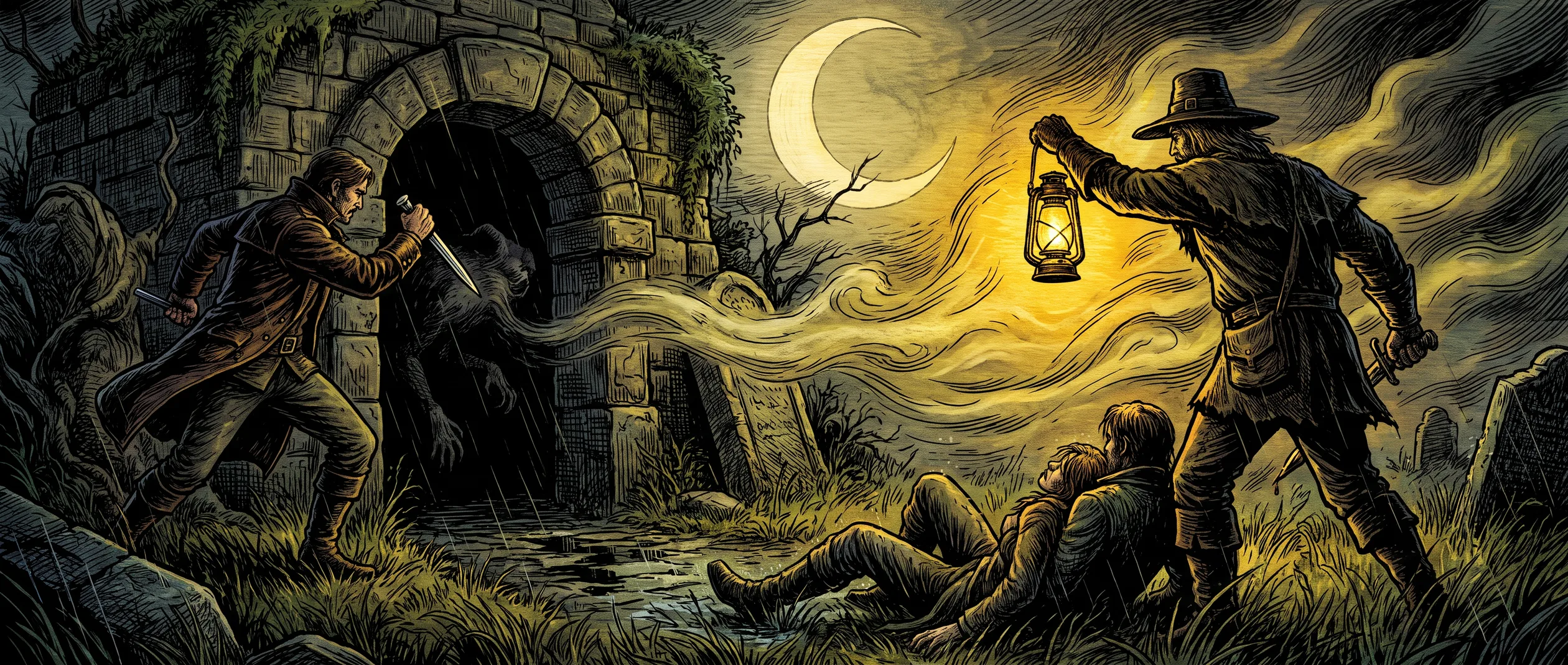
What you can do
10 roles
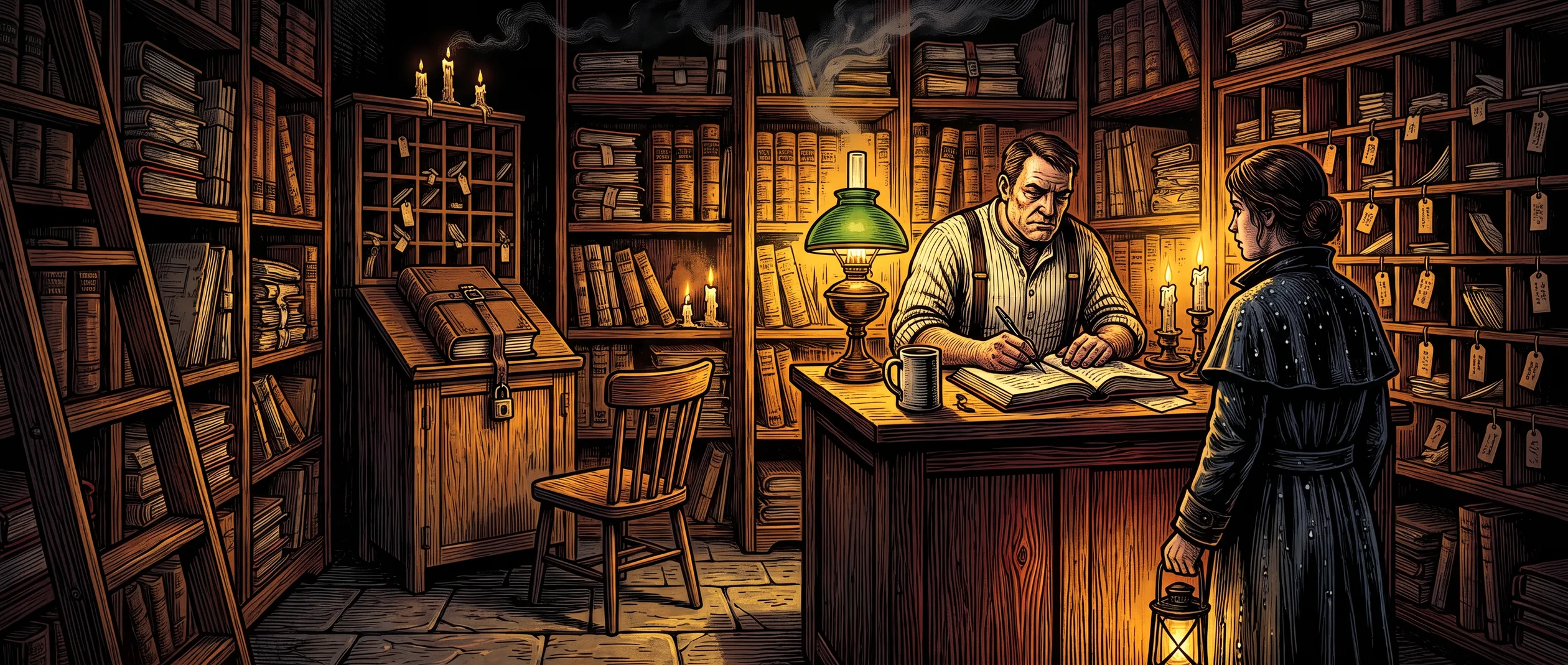
Whose door opens
Six mortal ledgers, one fog
No order in Mournwick pays a wage. You serve for the armory, the library, the consecration — and because the alternative is the dark. Duties kept raise your standing; a summons ignored bleeds it — and standing can run all the way down to hunted.
Every ledger has a face. Canon Crome consecrates hunters’ blades for free — and keeps a private list of which blades came BACK. Widow Slate buys anything and sells worse — but will not touch what came out of the Hagwood, and will not say which purchase taught her. And Coachman Burr keeps an empty seat on every midnight run, paid for the whole season — and has never seen the passenger.
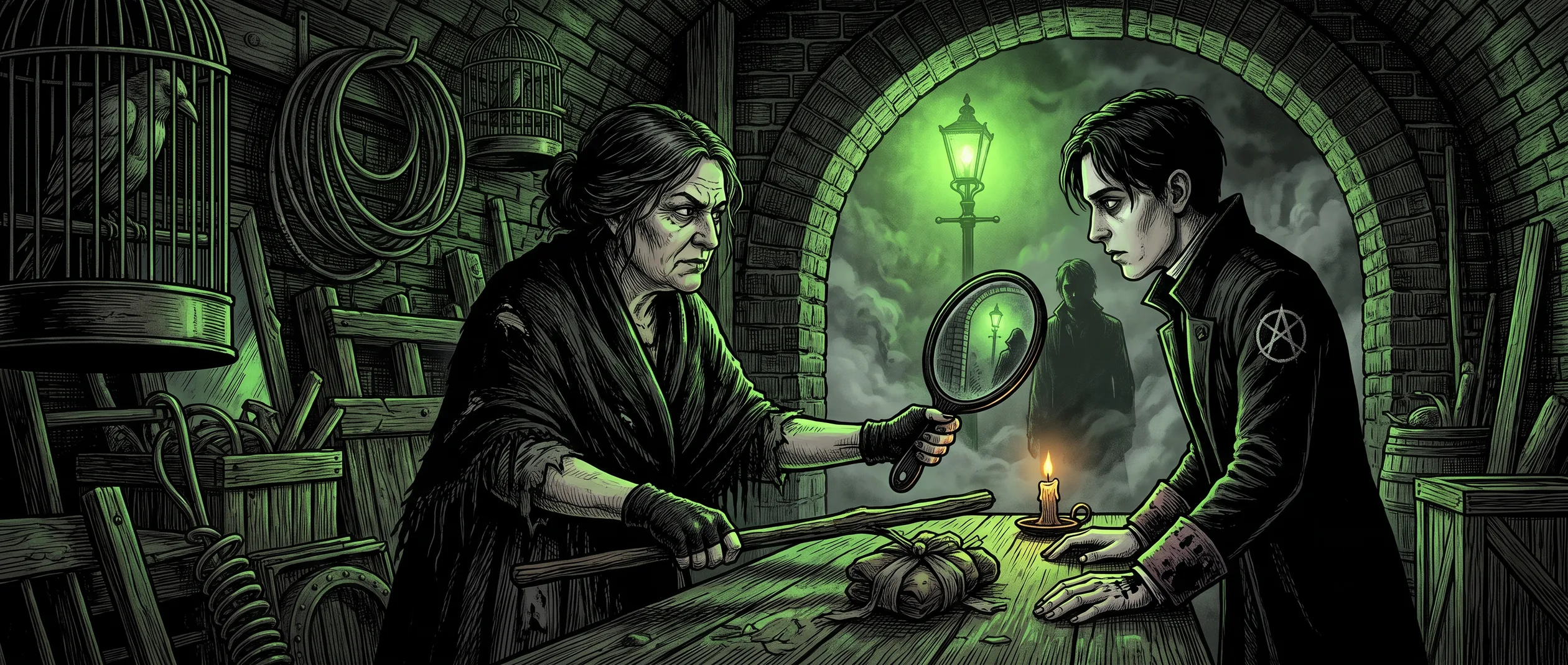
The register
Twelve things that should stay locked
Some objects came back from the Sundering wrong, and some were wrong before it. The Sept seals them; the Lantern Watch keeps a register page for each; the Cinder Court fences them anyway. A Sealed Thing is named, registered and singular — there is ONE of each in the world — and almost every one cuts both ways: carrying it prices Dread, draws the dark, or asks a rule of the bearer that the thing itself enforces.
If a Sealed Thing is destroyed, its register page goes blank — and the register does not take new entries. Nobody alive knows how the old entries were made.
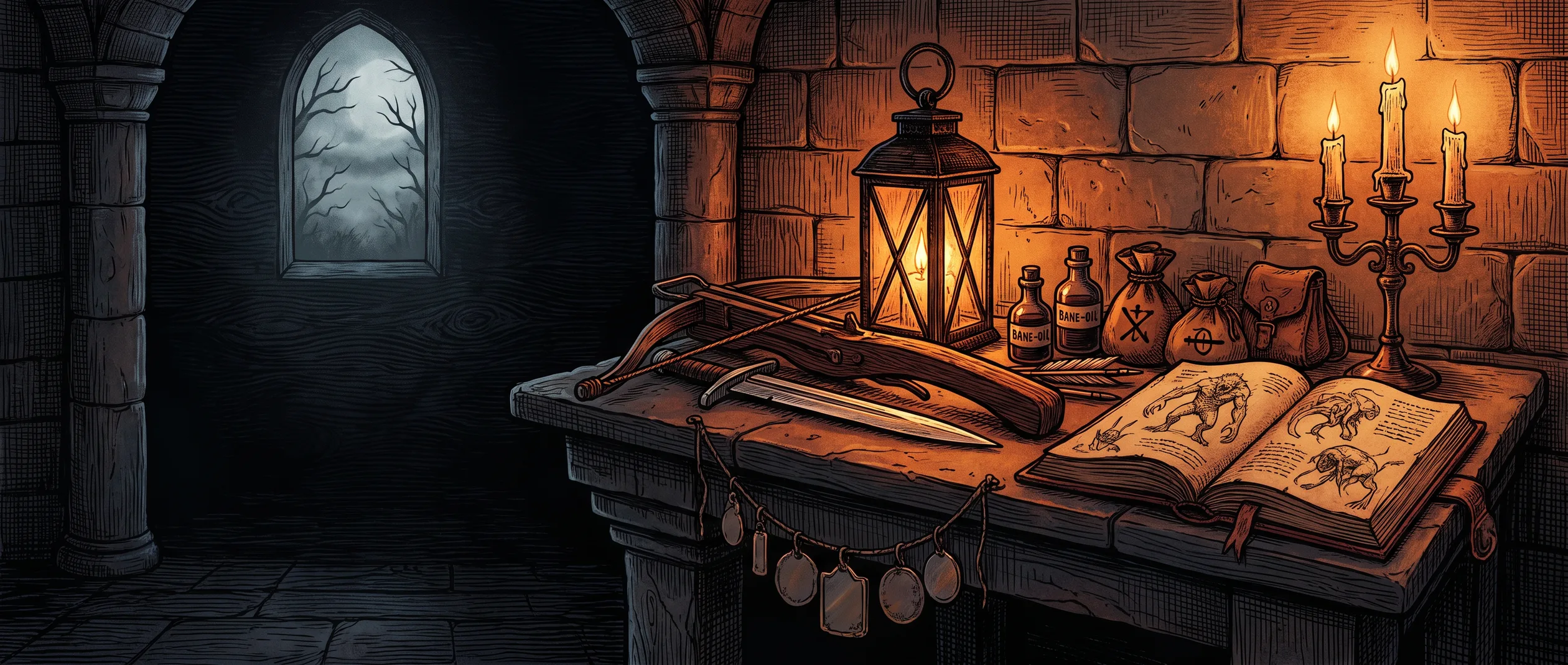
The arsenal
Arms, and what they cost
Real rows from the engine's own tables: the dice are the dice, the prices are the prices. Your gamemaster cannot fudge them, and neither can you.
One salvo costs a week's wage. The werewolf remembers it.
A season's wages, consecrated edge-first.
Faith, stoppered. Spend it like you mean it.
Nearly free. Carrying enough of them is the art.
Bottled daylight, for things that fear the dawn.
For the hunts where you want it alive.
… and 137 more catalogued pieces in play.
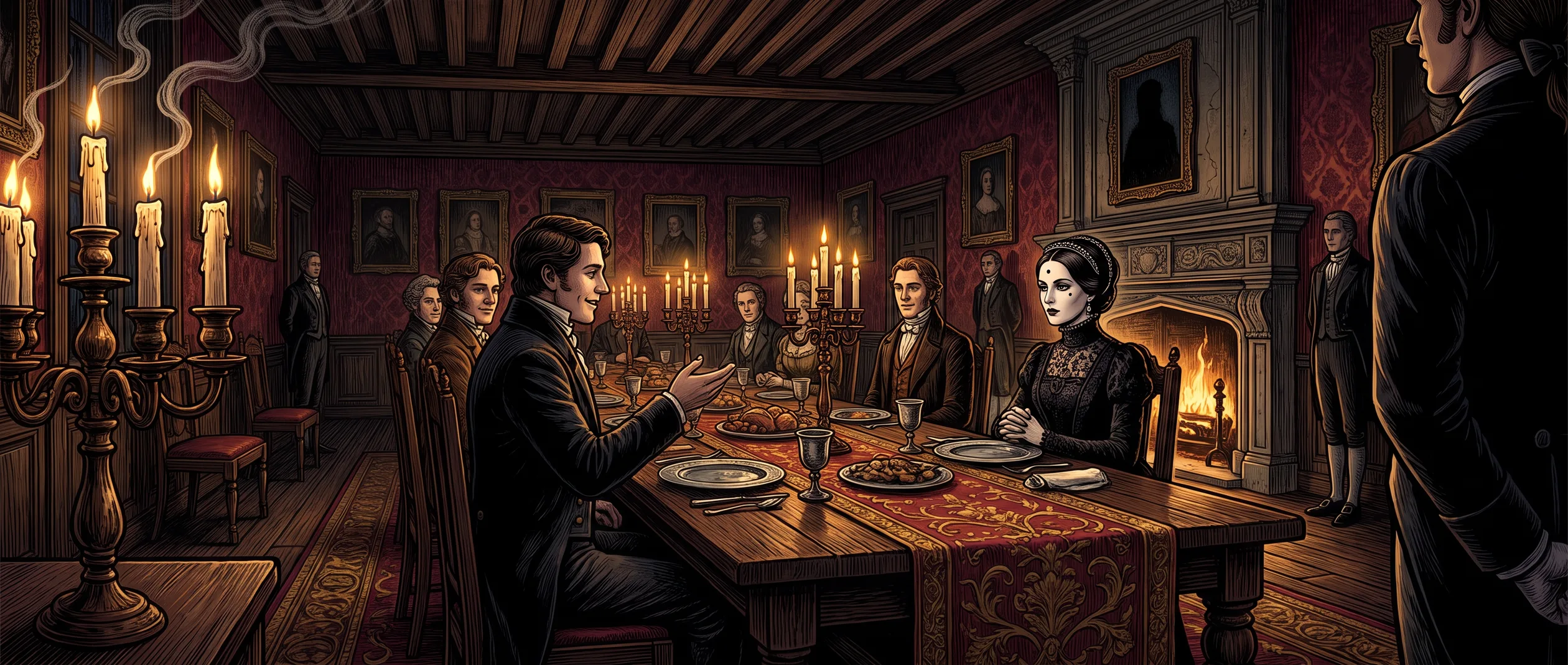
The powers in the fog
Five evils the fog answers to
Most horrors are a hunt. These five are a CAREER — old, patient, and woven into how the world already works. Each owns a piece of the map, wants something specific, and has been getting it for a long time. Ending one should take a campaign. Surviving one’s attention is a season.
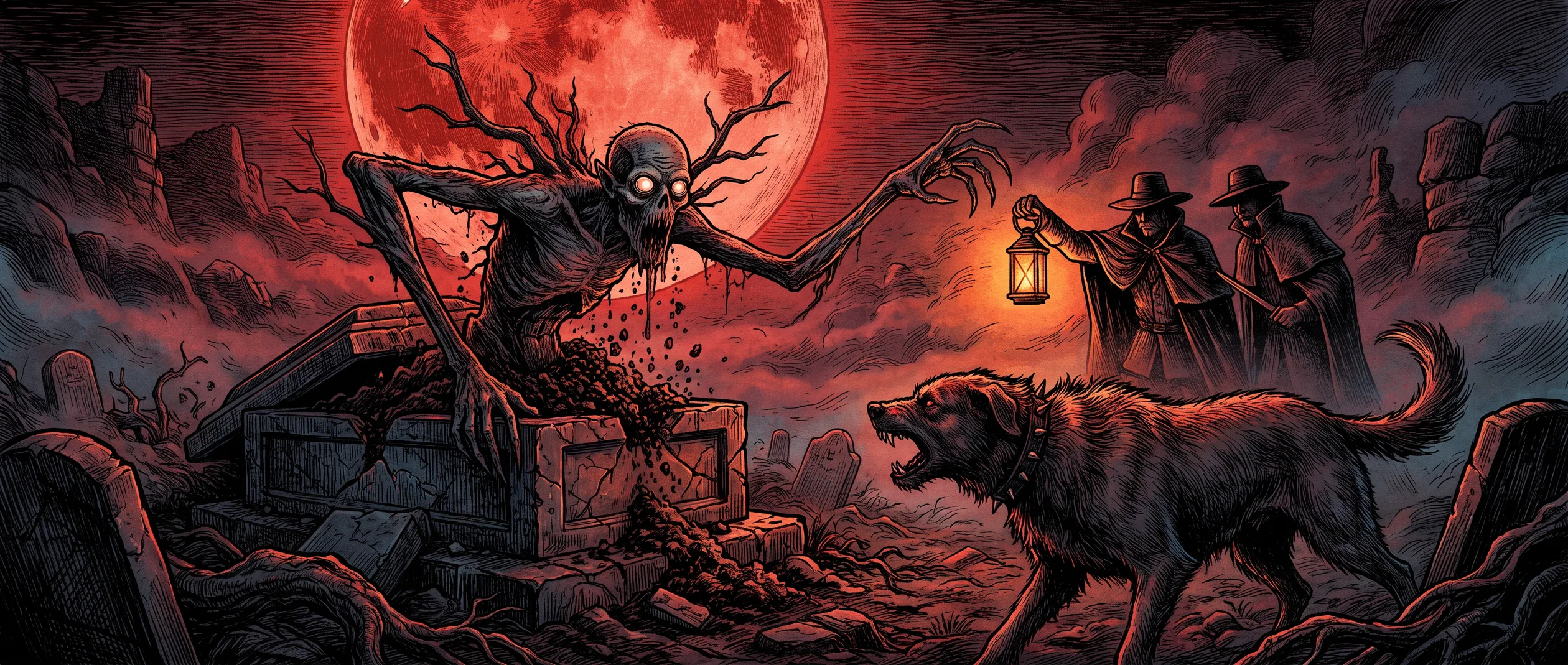
The opposition
What hunts you
Every foe is statted before the fight starts; what your party learns about them is recorded, hunt by hunt.
The wounds knit shut while you reload.
A dead lord with a will; steel merely bores it.
A fae delighted by exactly one thing. Run.
It remembers being worshipped.
Patience measured in centuries, hunger in nights.
What sits a throne after the kingdom forgets it died.
… and 53 more in the bestiary.
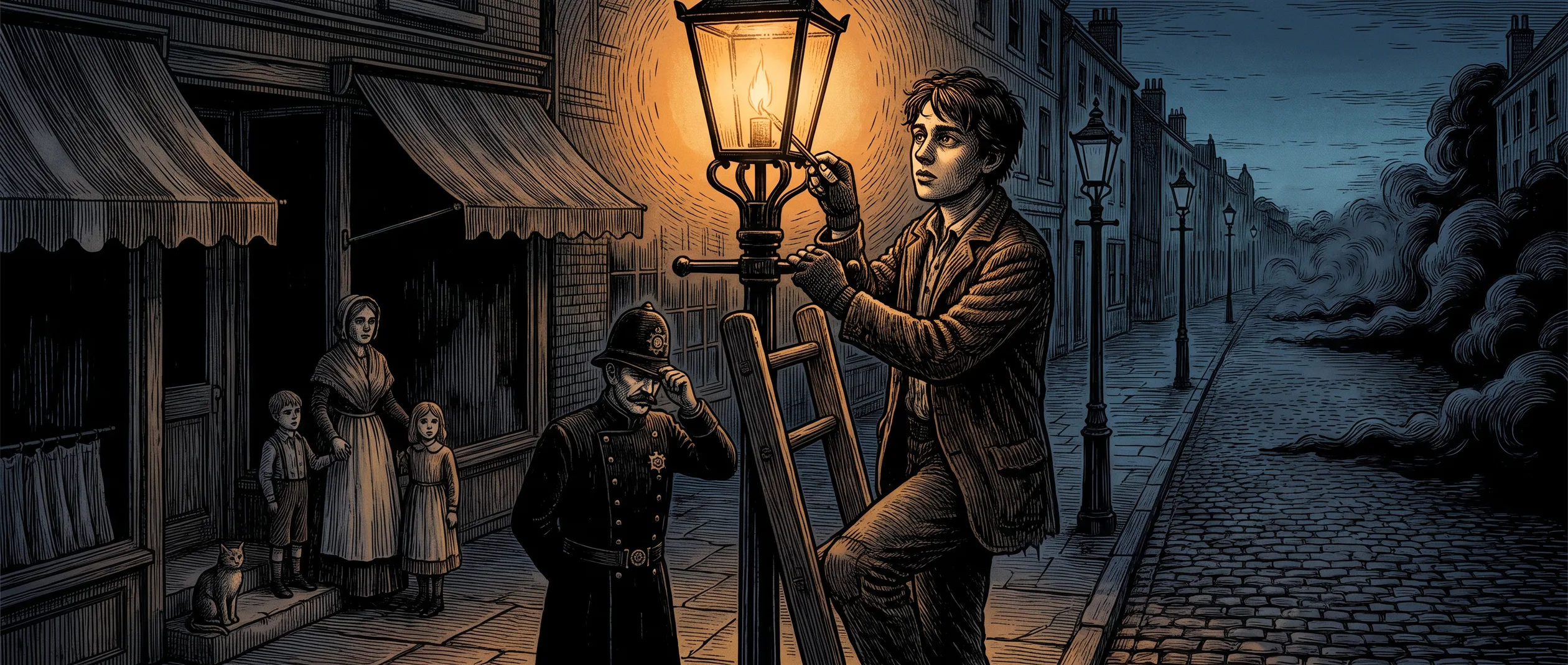
Forty years of fog
The lamps hold
Forty years ago the veil between the living and the dead tore — no one agrees how — and the Old Things woke. The first Long Night lasted eleven days. The Empire answered with light and iron: the gas-lamp works, the rail spine, the rational sciences by decree. The Sept consecrated the ash covenant, and every parish learned to lock its church before dark. The quarantine posts around the worst parishes went up in the first year. They are still manned, and still paid.
The city is not perpetual night. It lives by day — markets, the rail, faction business — and daylight is a weapon: some Old Things cannot bear it, a Sun-lantern carries a sliver of it, and dragging a creature into a dawn-lit street is a real tactic. An ordinary, safe afternoon is what makes the night that follows land harder.
Now the lamps hold, the fog keeps its appointments, and the trade is steady. No parish street goes unlit after dusk — the poor pay the oil-tax, and the Drowned Mile mostly doesn’t.
Begin a Mournwick campaign
Connect lorewend to your AI, make a character, and tell the gamemaster you want Mournwick. The free tier plays a full campaign.